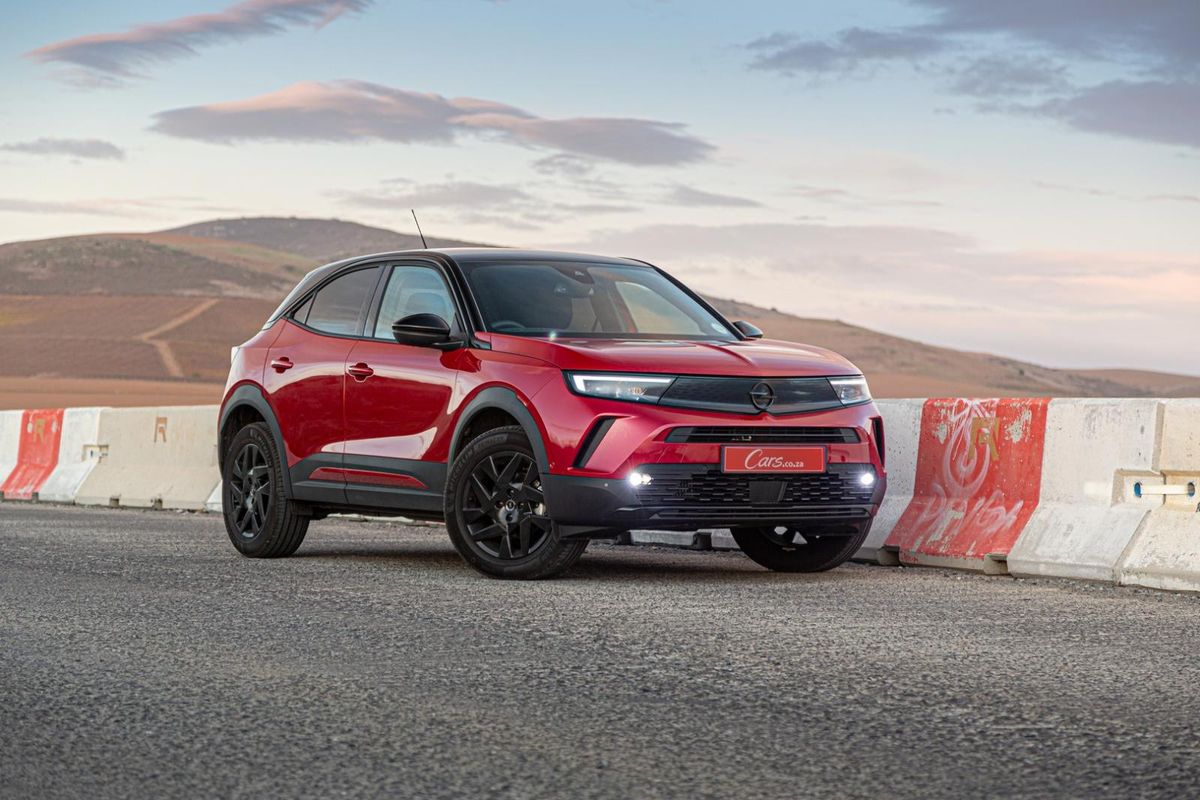
Opel has gained a new lease of life under the custodianship of the Stellantis group and the fresh-faced Mokka premium crossover – now available in Mzansi – embodies the brand’s revival.
We like: Design, quality, ride and handling, performance and efficiency
We don’t like: Cramped rear seats, small load bay, awkward ergonomics
FAST FACTS
- Model: Opel Mokka 1.2T GS Line
- Price: R519 900
- Engine: 1.2-litre 3-cylinder, turbopetrol
- Power/Torque: 96 kW/230 Nm
- Transmission: 8-speed automatic
- Fuel consumption: 6.1 L/100 km (claimed)
- Luggage capacity: 310-1 105 litres
Serious about buying/selling?
Some Opel dealerships regularly offer great deals. See our New Car Specials here!
Looking to sell your car? Offer your vehicle to dealers with Match!
Search for a new or used Opel here
Where does the 2022 Opel Mokka fit in?
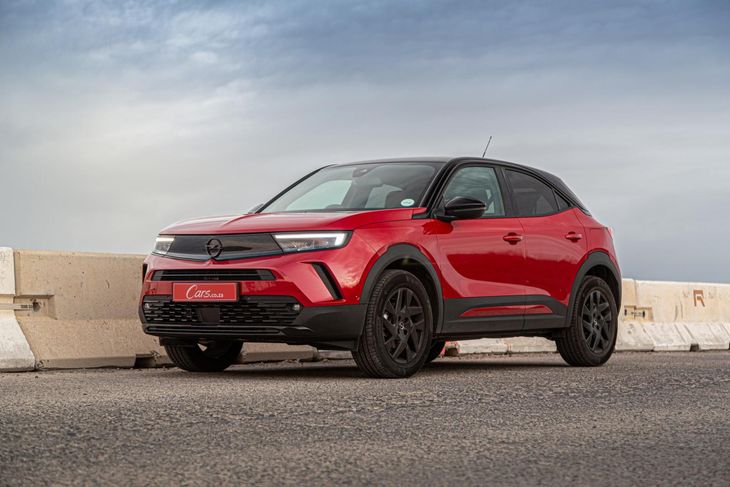
Opel has taken a few more risks with the design of this new-generation Mokka.
The compact crossover/small-SUV segment continues to be the “darling” of the motor industry, which explains why it has become the fiercest battleground in the new-vehicle market! Whereas the B- (Polo) or C- (Golf) hatchback segments were all-important in the past, brands are increasingly abandoning those shrinking “legacy” sectors and doubling down on crossovers.
Opel is a prime example of a brand that’s strongly focused on producing family cars with hiked-up ride heights and off-road-inspired exterior styling. Whereas it is best-known in this country for its Corsa and Astra models, the Russelsheim-based brand’s line-up is increasingly dominated by crossovers (in fact, it has confirmed that the new Astra won’t come to South Africa). It currently offers the (recently refreshed) Crossland, Grandland X and now, all-new Mokka.
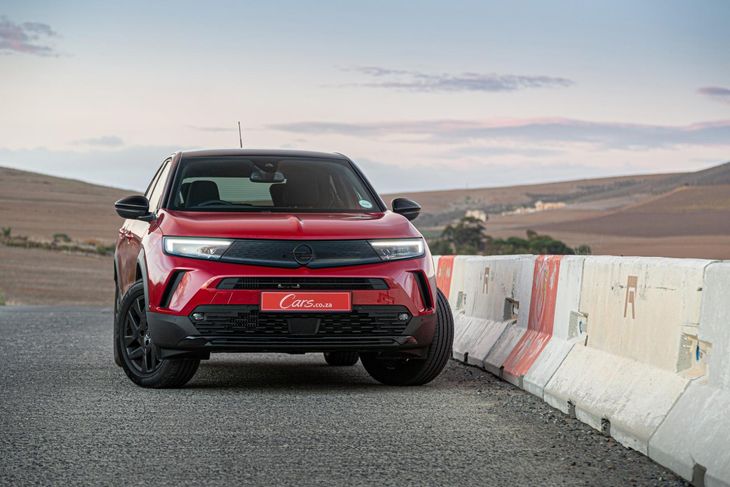
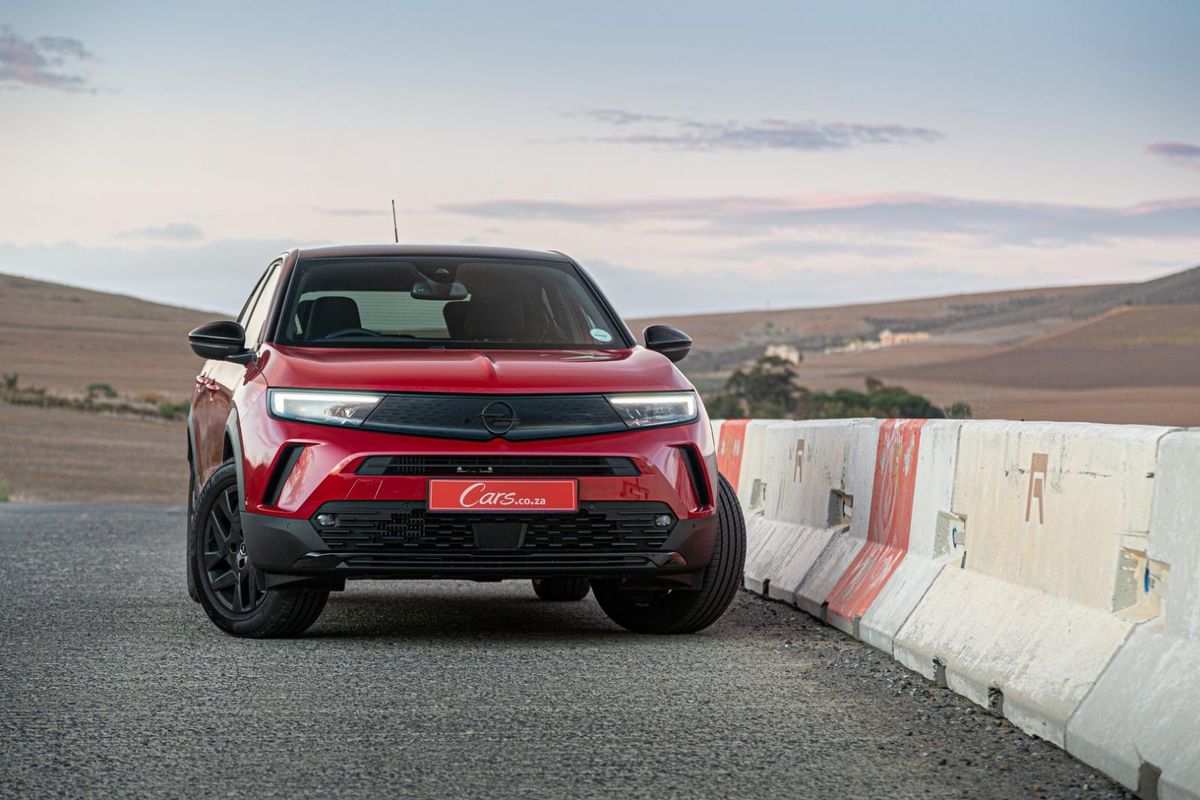
The new generation Mokka is instantly recognisable by virtue of its “Vizor” grille.
Of course, the Mokka name is not new; the original car was one of the first crossovers of its size to reach the market, and it had a long, relatively successful production life from 2012 to 2019. But this new model is a rather different proposition.
Based on the same underpinnings as the Peugeot 2008/208 and latest Opel Corsa, it is targeted squarely at the premium “boutique” end of the market, leaving the Crossland to compete with more practical, family-oriented offerings such as the Hyundai Creta, Kia Seltos, Toyota Corolla Cross and Volkswagen T-Cross etc.
So, in short, the new Mokka is aimed at buyers who prioritise look-at-me kerb appeal, high-end technology and premium quality over practicality and value for money. The Mokka is an undeniably striking machine, but does it have the goods to put Opel back in the running in South Africa against the likes of the Hyundai Kona, Honda HR-V, Mazda CX-30 and Volkswagen T-Roc (to name just the most well-known contenders)? There’s only one way to find out…
How the 2022 Opel Mokka fares in terms of…
Design and Packaging
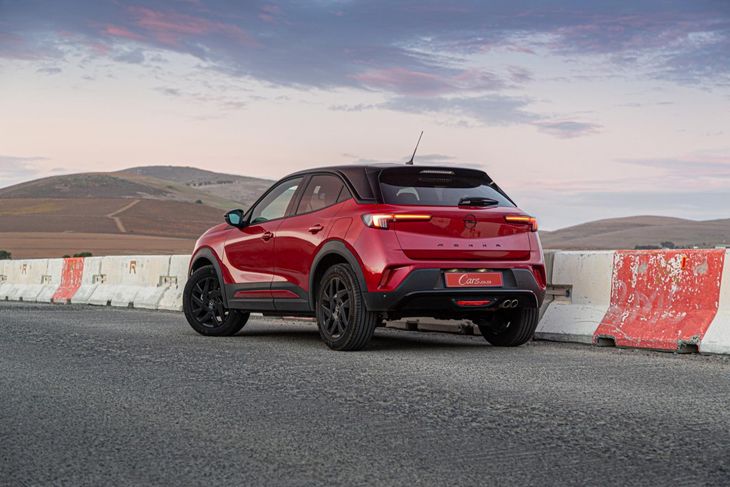
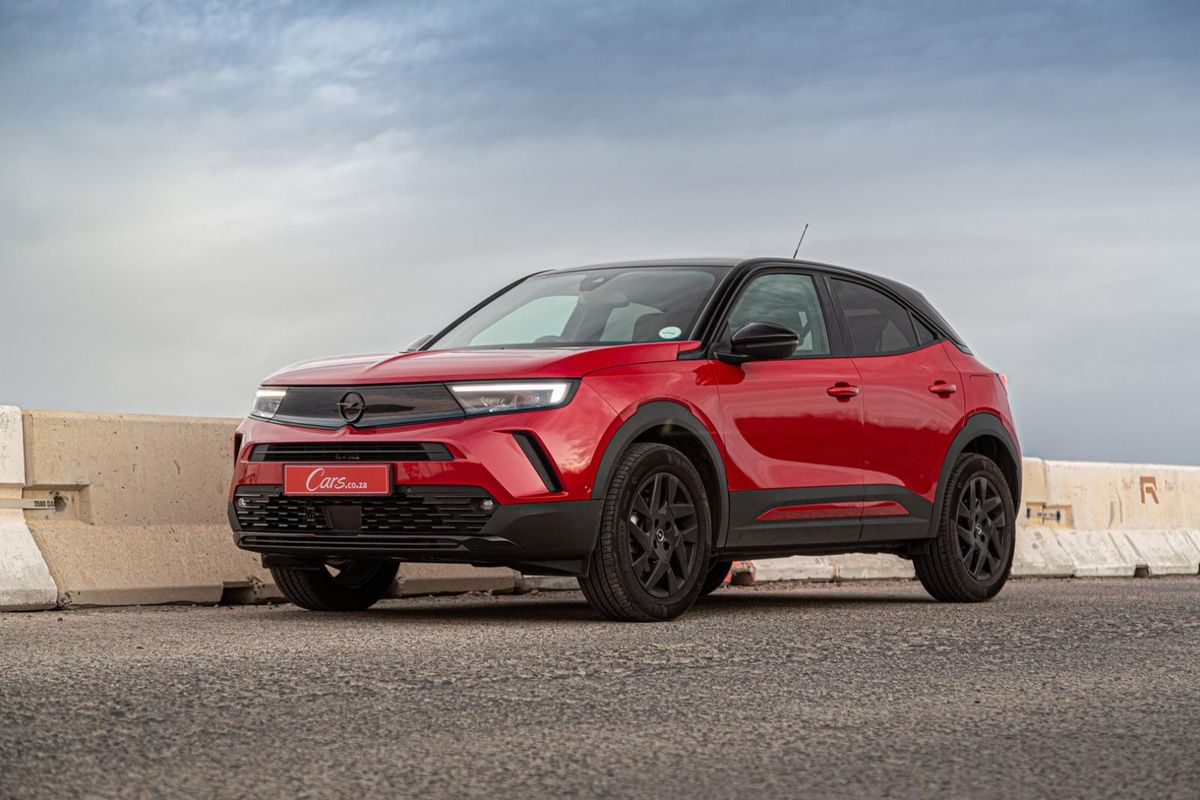
The tight proportions and a short wheelbase give the Mokka a distinctive road presence.
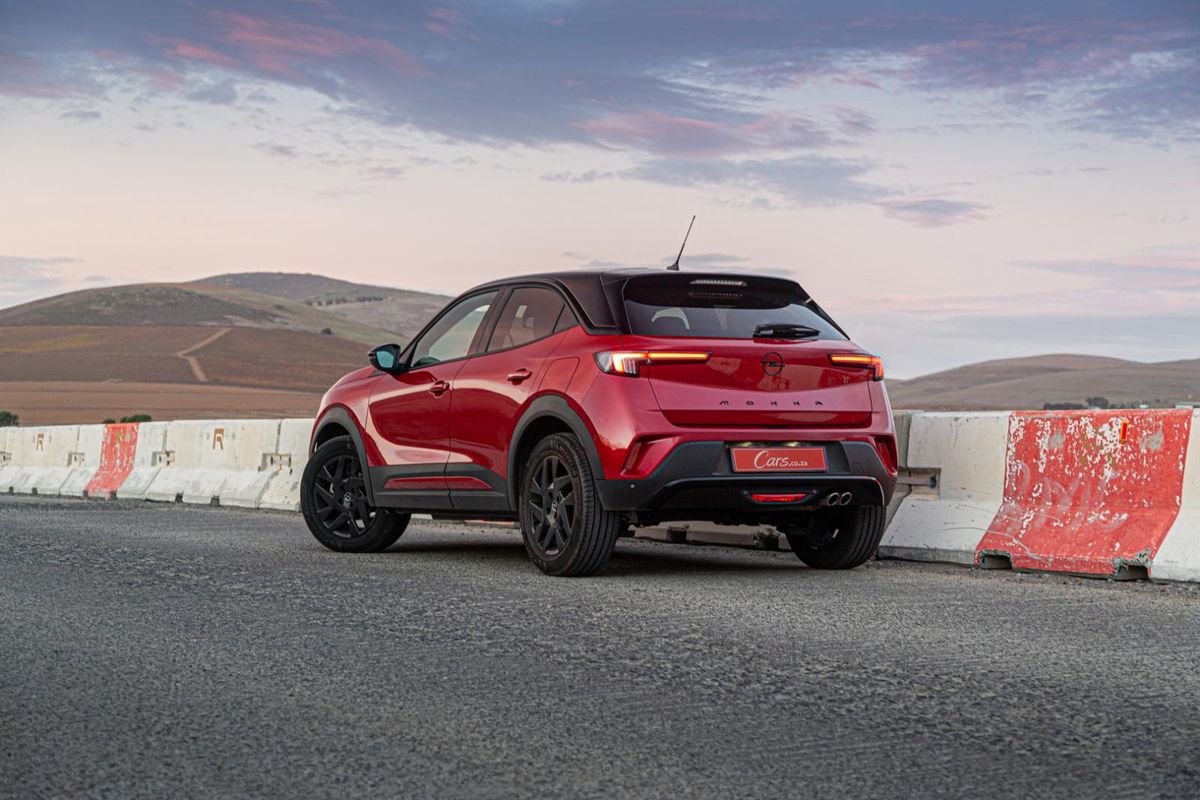
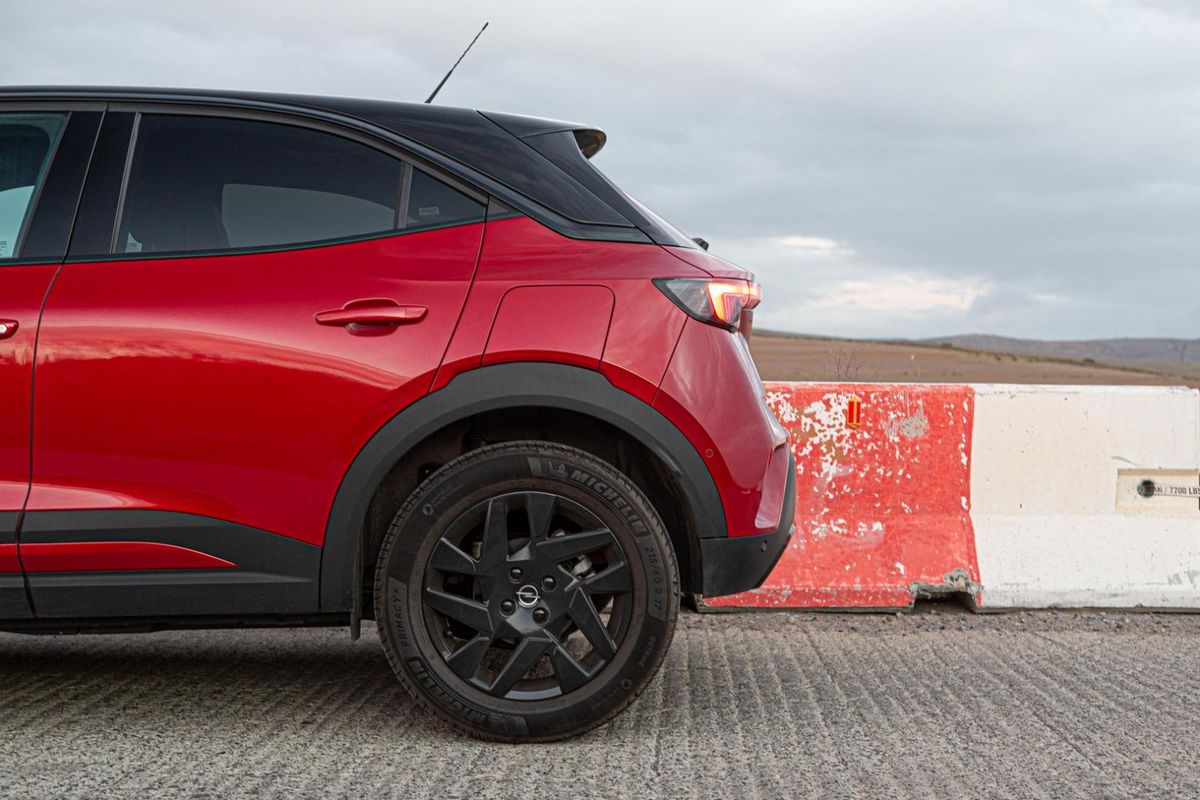
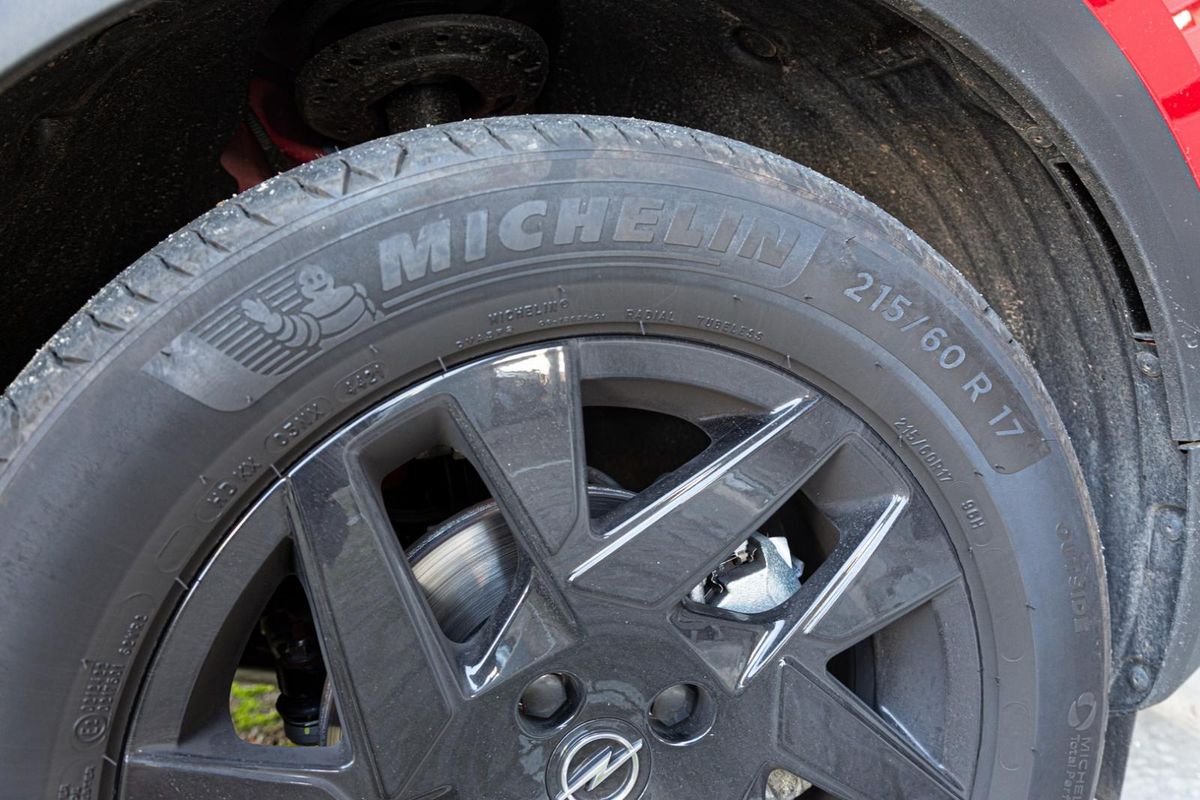
It’s a looker, that’s for sure. Featuring chiselled lines and Opel’s so-called new “vizor” face, the Mokka adds a welcome dash of flair to the German firm’s otherwise conservative local line-up. In many ways, the newcomer is symbolic of a brand that’s been revitalised. In South Africa, 2 Mokka derivatives are offered (powered by the same engine), and the one featured in this review is the flagship 1.2T GS Line… it can be distinguished from its Elegance sibling by its contrasting gloss black roof, 17-inch alloy wheels, rear privacy glass, blacked-out sections on the bumpers, and the standard fitment of Opel’s Matrix Lamps Pack (including directional LED headlamps – with levelling control – and LED taillamps).
Although it’s based on the same underpinnings as the Peugeot 2008 (which is a smash-hit in the European market), the Mokka boasts rather different proportions. It’s of similar width, but 150mm shorter and fractionally lower than its French cousin and has a shorter wheelbase. Consequently, the Opel is a sportier-looking compact crossover than the 2008, not to mention its main rivals.
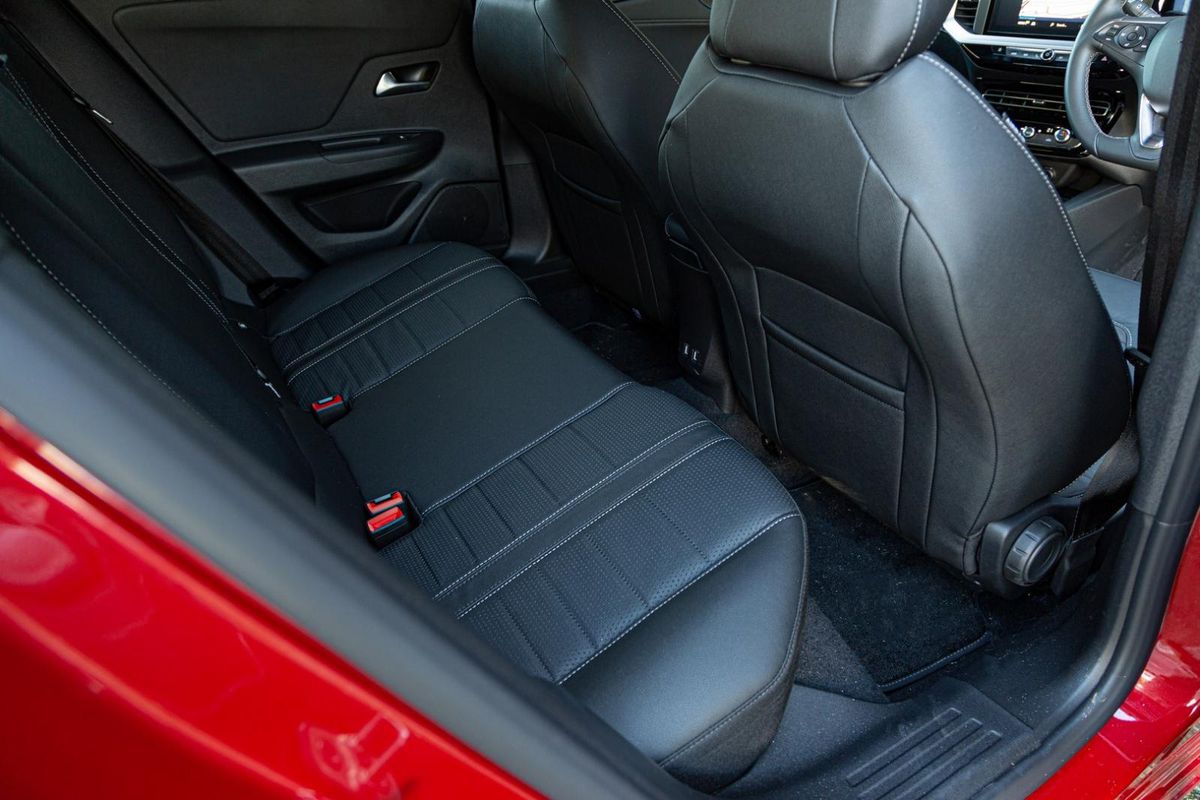
Those dimensions do have some implications on interior packaging, however. With its shorter wheelbase and body, the Mokka offers less rear legroom than the Kona, HR-V and T-Roc and less luggage capacity than the Hyundai and VW.
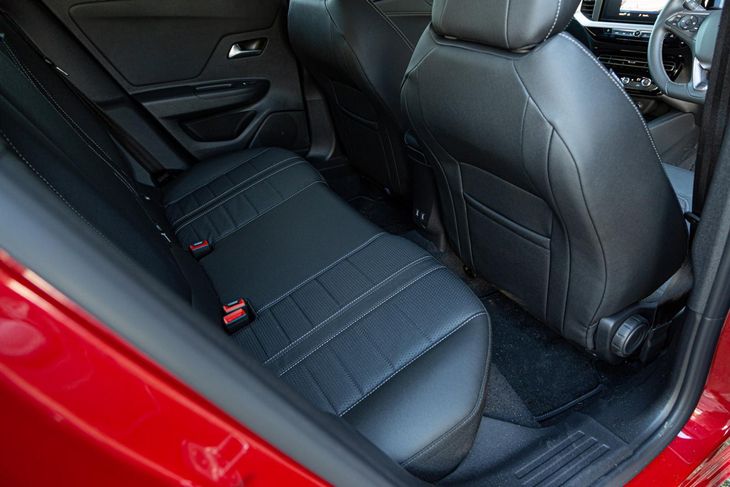
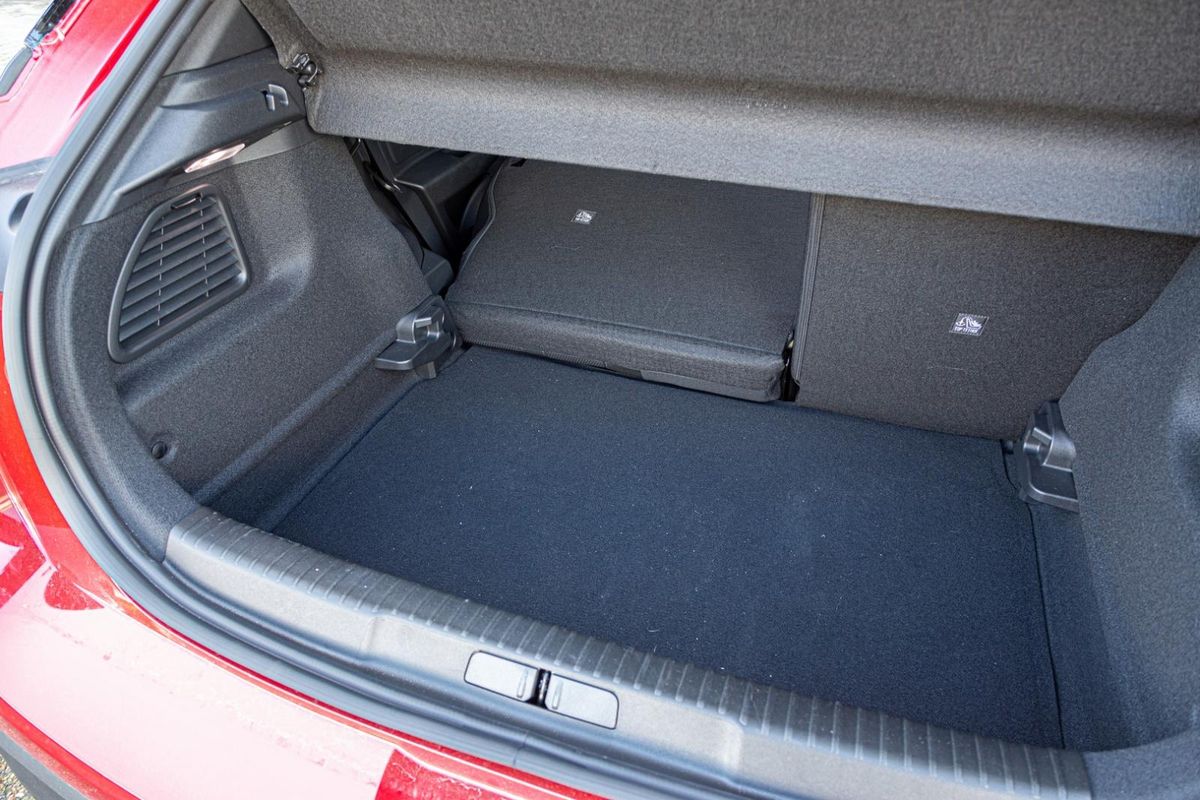
Look, the Mokka’s rear occupant space will be fine for the purposes of transporting small children, but the newcomer should not be viewed as a family-car offering, anyway. Think of it rather as a more affordable Audi Q2- or BMW X2 type of vehicle. For the record, the Mokka has a claimed load-bay capacity of 310 litres, whereas the Kona offers 544 litres, the HR-V 304 litres, the CX-30 295 litres and the T-Roc 445 litres.
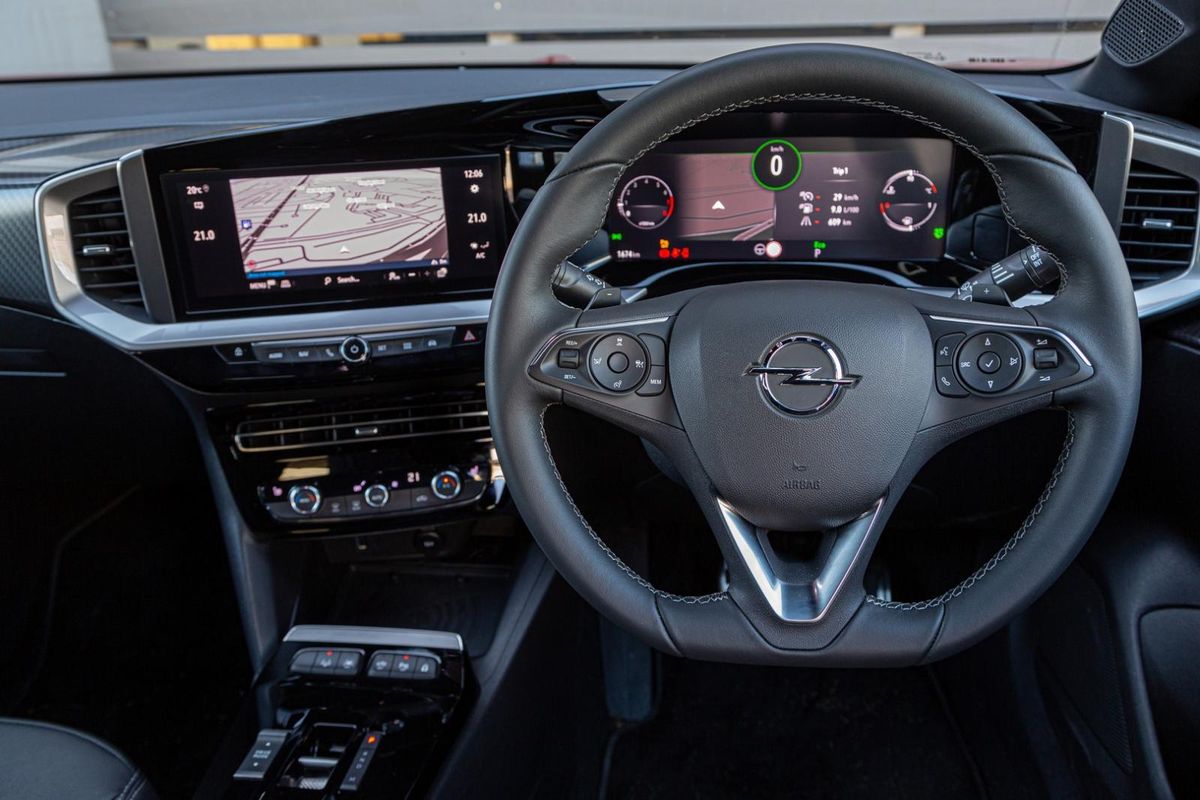
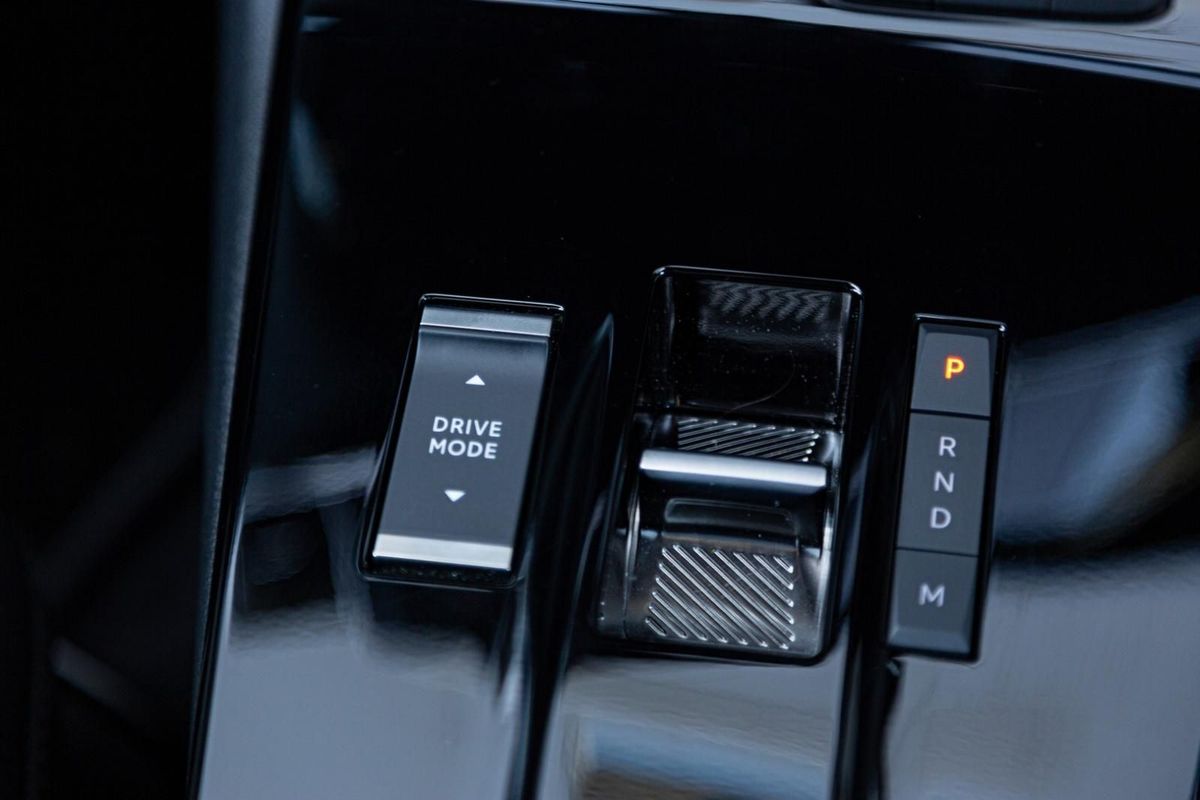
Space is considerably more generous up front, but the Mokka’s packaging is rather quirky. The fascia has a very flat, upright structure and the lack of a bulky transmission tunnel with a transmission lever creates the sensation of “sparseness”. In fact, the ergonomics might be problematic for some drivers… the low-slung seating position encourages an “arms stretched-out” driving position, but that makes reaching the infotainment system’s touchscreen a bit of a stretch.
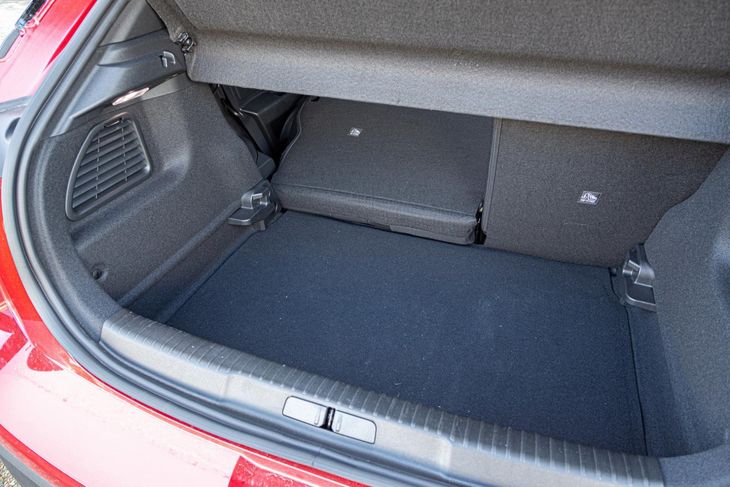
The Mokka’s load-bay capacity (310 litres) is less than those of its Hyundai and Volkswagen rivals, but it’s not the smallest in class.
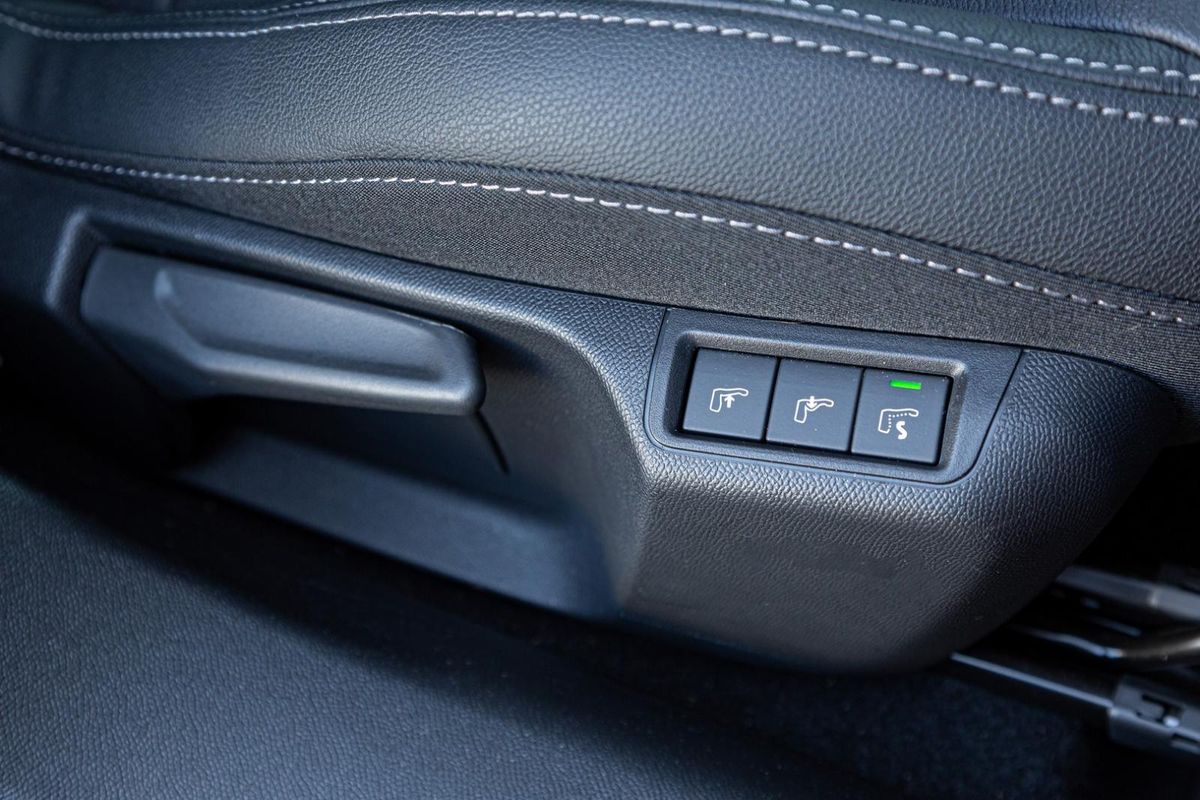
Of course, with a generous range of adjustments available from the steering column (rake and reach) as well as the seat (manual height), you will most likely be able to find a position that works for you, but it will take a while to get used to the layout. It’s also somewhat bizarre that the driver’s seat offers electric lumbar support, massaging and heating – but it has to be adjusted manually.
From behind the ‘wheel, when seated in the well-bolstered driver’s seat and looking over the bonnet with its centre “spine” – a feature taken from the iconic Manta coupe – the Mokka feels more like a sporty hatchback than a tame crossover.
Performance and Efficiency
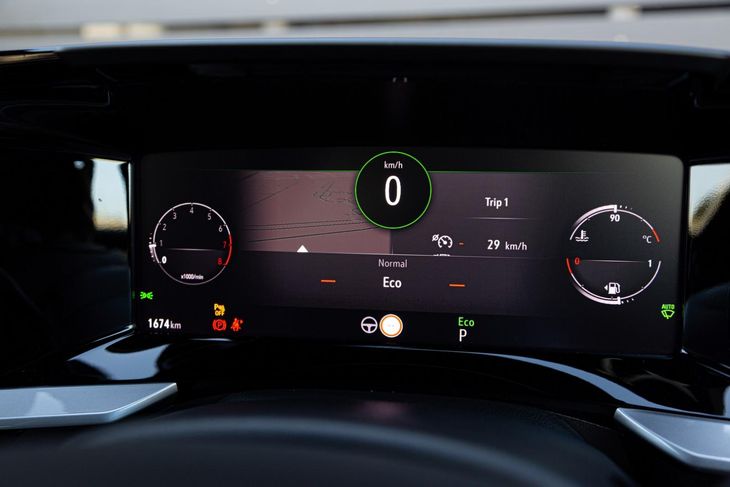
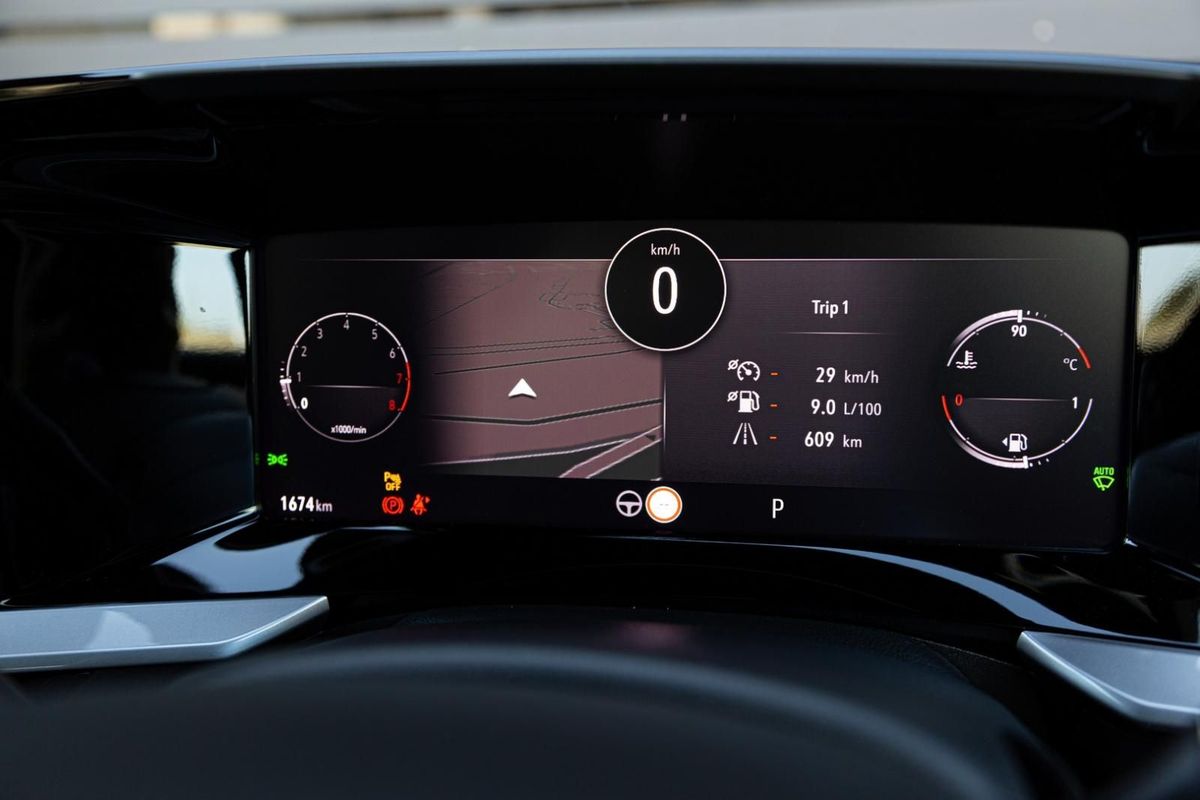
The instrument cluster is a fully digital affair nicely laid out.
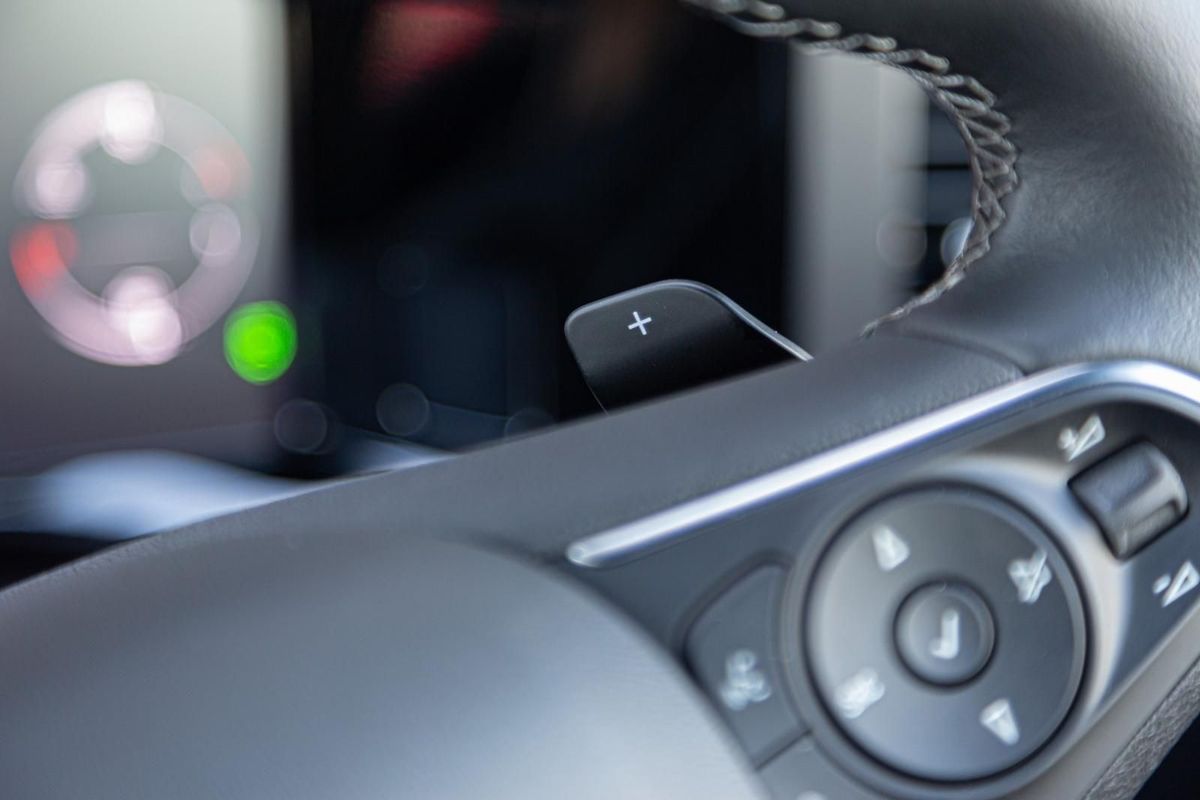
Does the new Mokka have the go to match the show? The short answer is yes. It may only have a 1.2-litre 3-cylinder turbopetrol engine under the bonnet, but it’s a punchy unit that emits a rorty, eager soundtrack. It delivers 96 kW and a substantial 230 Nm of torque, with power going to the front wheels via an 8-speed automatic transmission (paddle shifters are fitted to the steering wheel, should you ever feel inclined to actuate manual gear changes).
While the Opel’s peak outputs can’t match those of the comparably-priced Kona and T-Roc (it does produce slightly more torque than the CX-30 and outguns the HR-V), the Mokka is lighter than all of them (but the VW) and has been geared to feel very nippy around town. There are 3 drive modes available (Normal, Eco and Sport), and Opel claims a 0-100 kph time of 9.2 sec, which is not, um, “niche-leading”, but definitely on the brisk side for a compact crossover of its kind.
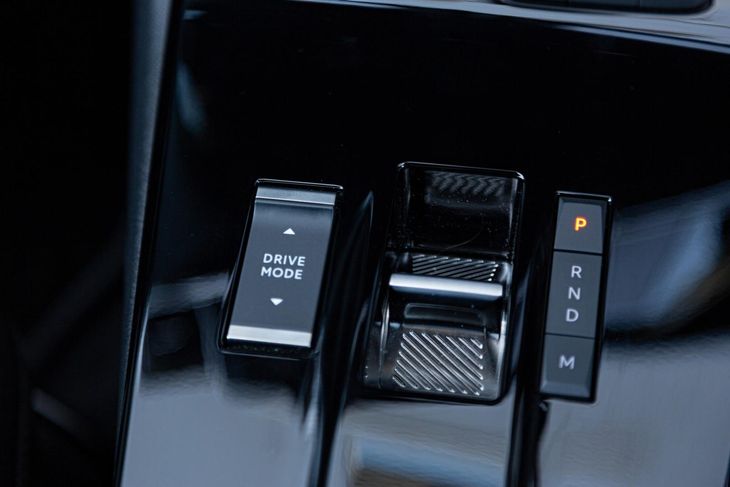
Out on the open road and at higher speeds, the Mokka is a relaxed, refined cruiser, and its 8-speed automatic transmission is really well-matched to the small-capacity turbopetrol engine’s power-delivery characteristics.
In terms of fuel economy, the Mokka has the edge on most of its rivals, at least according to our New Car Specs database. Opel claims an average consumption figure of 6.1 L/100 km for this derivative, which is slightly lower than the T-Roc (6.2 L/100 km) and just behind the HR-V (6.0 L/100 km). You may struggle to achieve efficiency in the 6.0 L/100 km ballpark in real-world conditions, but a return of around 7L/100 km would be good. The tank is small, however (44 litres).
Comfort and Features
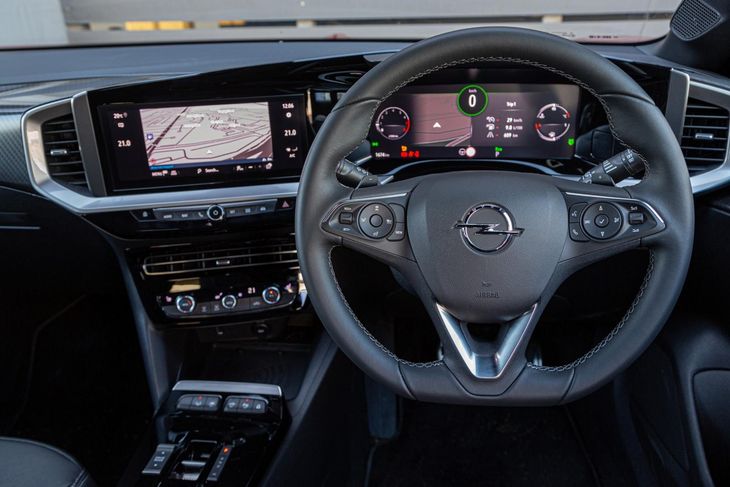
The Mokka 1.2T GS Line comes with a very high level of standard specification.
As the flagship of the (admittedly truncated) Mokka line-up, the 1.2T GS Line packs a generous array of features into its compact body. Appearance-wise, the front of the Opel’s cabin looks decidedly technologically advanced, courtesy of a high-res digital dashboard, as well as a 10-inch infotainment touchscreen endowed with Apple Carplay and Android Auto compatibility. Built-in navigation is also present (it’s not a given in an era of smartphone route-guidance apps), and the display features a 180-degree augmented camera view that detects rear traffic/objects. A wireless smartphone charging pad is provided at the front (complemented with a USB outlet), while 2 more USB ports are availed to aft occupants.
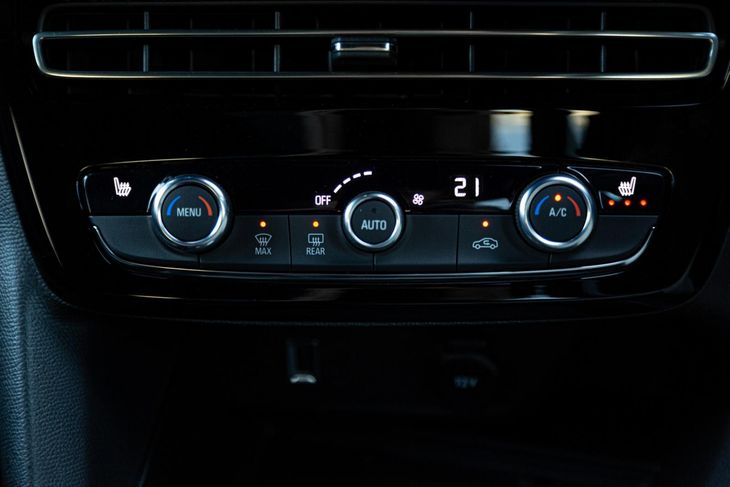
Although the Mokka shares many components with its Stellantis group siblings, its switchgear is still marked in “Opel font”.
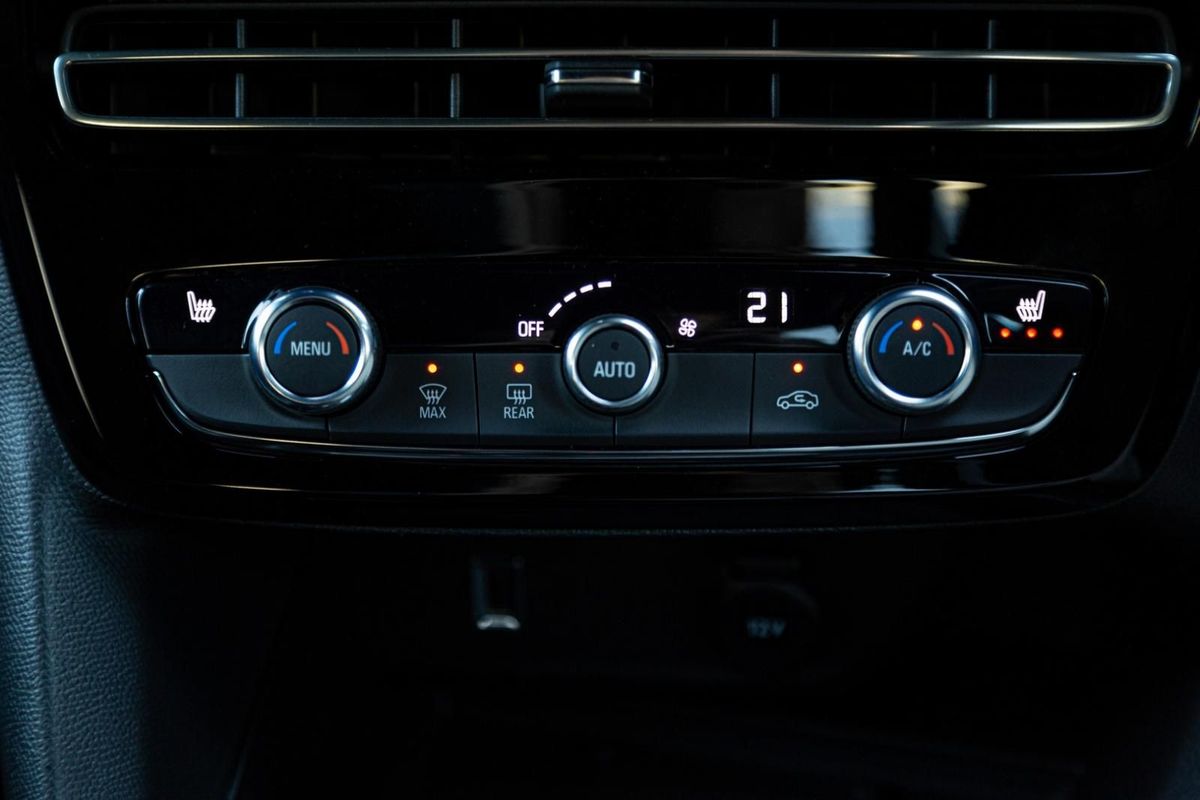
The 1.2T GS Line also features smart leather upholstery, as well as (fake) carbon-fibre trim and satin-silver finishes to break up the rather sombre (black) ambience. Dual-zone climate control is standard, as are auto lights and -wipers.
In terms of safety specification (also see the section under Ride and Handling), the Mokka ticks most boxes. Opel’s newcomer comes equipped with 6 airbags, but although it scored 4 – not 5 – stars in a recent EuroNCAP crash test (to a many people’s surprise), note that the car-safety authority awarded that rating because the Mokka wasn’t equipped with active emergency braking for cyclists or a centre airbag. Therefore, it had nothing to do with the car’s structural integrity.
Ride and Handling
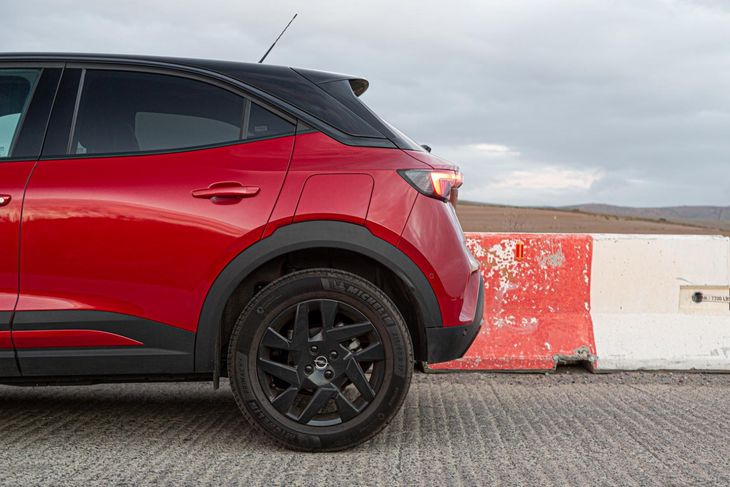
The Mokka proves fun and enjoyable to drive while also being quiet inside.
Considering the admirable ride and handling characteristics exhibited by other models that are based on the ex-Peugeot-Citroen Common Modular Platform, we had high expectations of the Mokka – and it certainly didn’t disappoint. Very few small cars manage to strike such a wonderful balance of roll-free, sharp dynamics and suppleness. The Mokka rides bumps in a manner that befits a bigger, well-damped luxury car, yet its body doesn’t yaw alarmingly and the handling remains precise when the car’s made to corner briskly – the sporty looks and low-slung driver’s position aren’t just for show! This is a crossover that you’ll enjoy driving; the pleasingly weighted steering and sharp handling are certainly bonuses!
Perhaps equally impressive is the Mokka’s NVH (noise, vibration and harshness) control. Cars that prioritise sportiness and weight-saving measures tend to exhibit excessive road- or wind noise, but the Mokka’s cabin is a calm and tranquil place, which speaks volumes of excellent body rigidity and no skimping on insulation materials. In short, it rides and feels like a quality product.
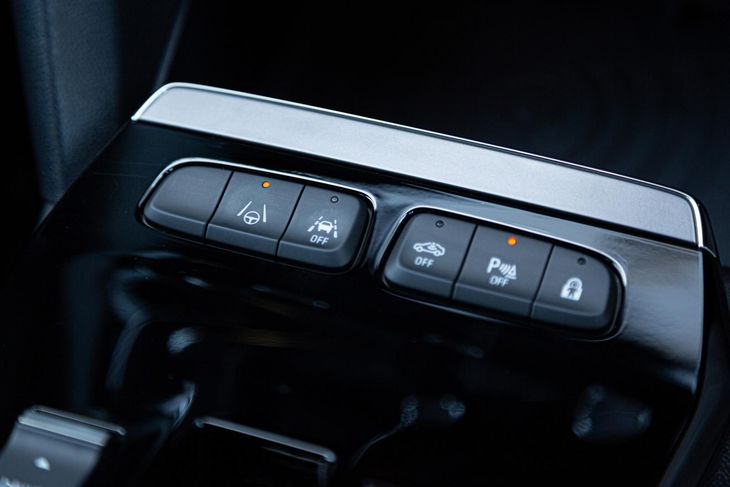
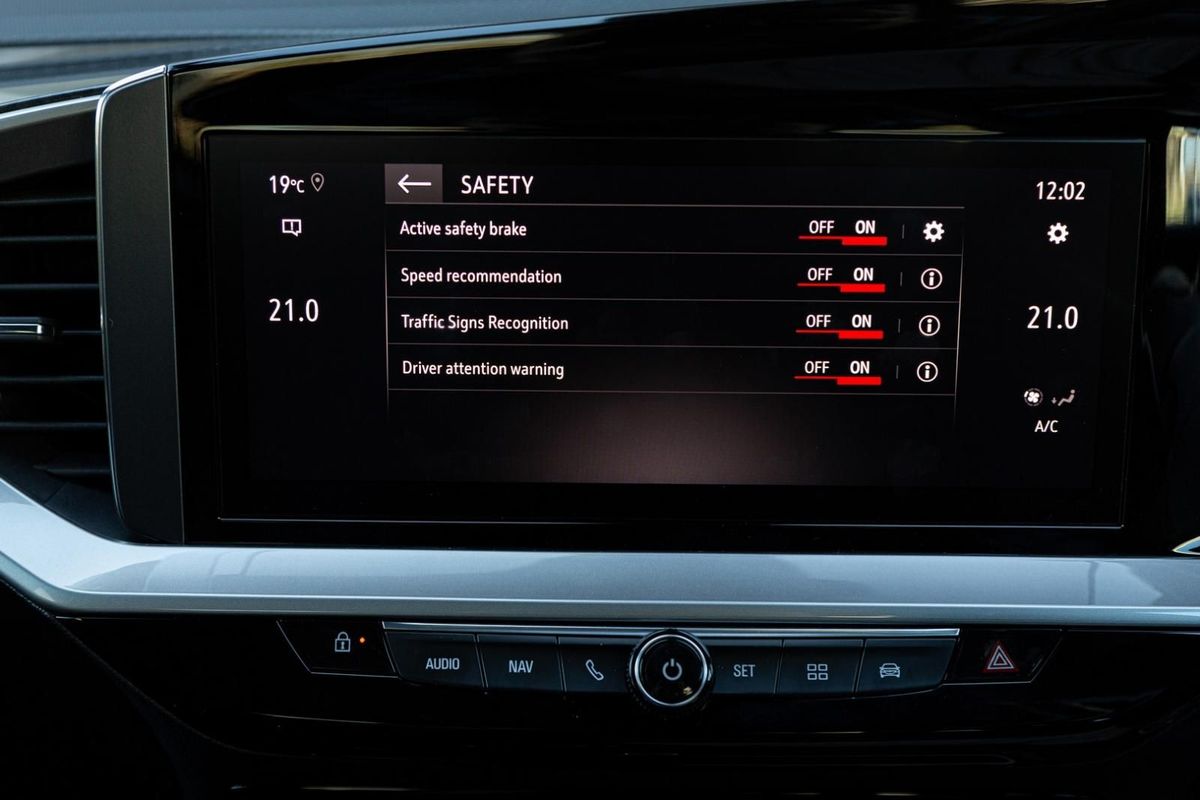
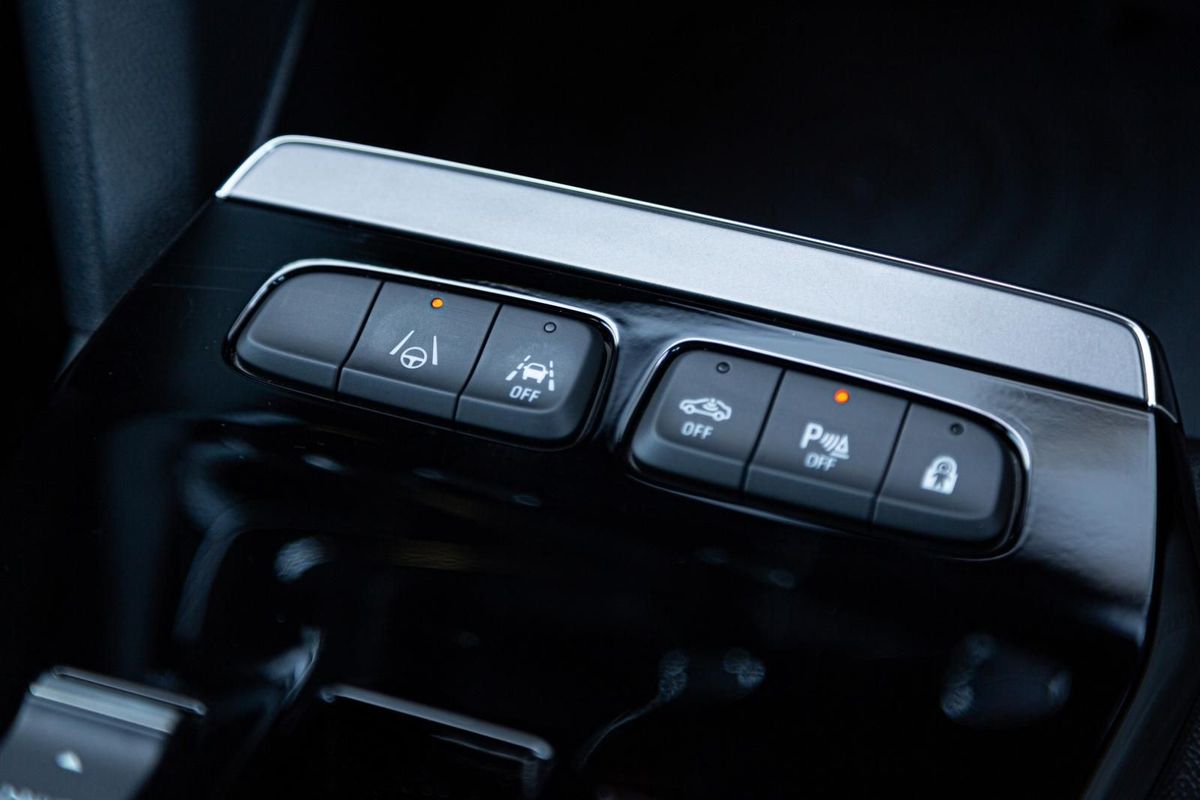
The active lane-keep assist and -departure warning functions can be switched on/off on this console.
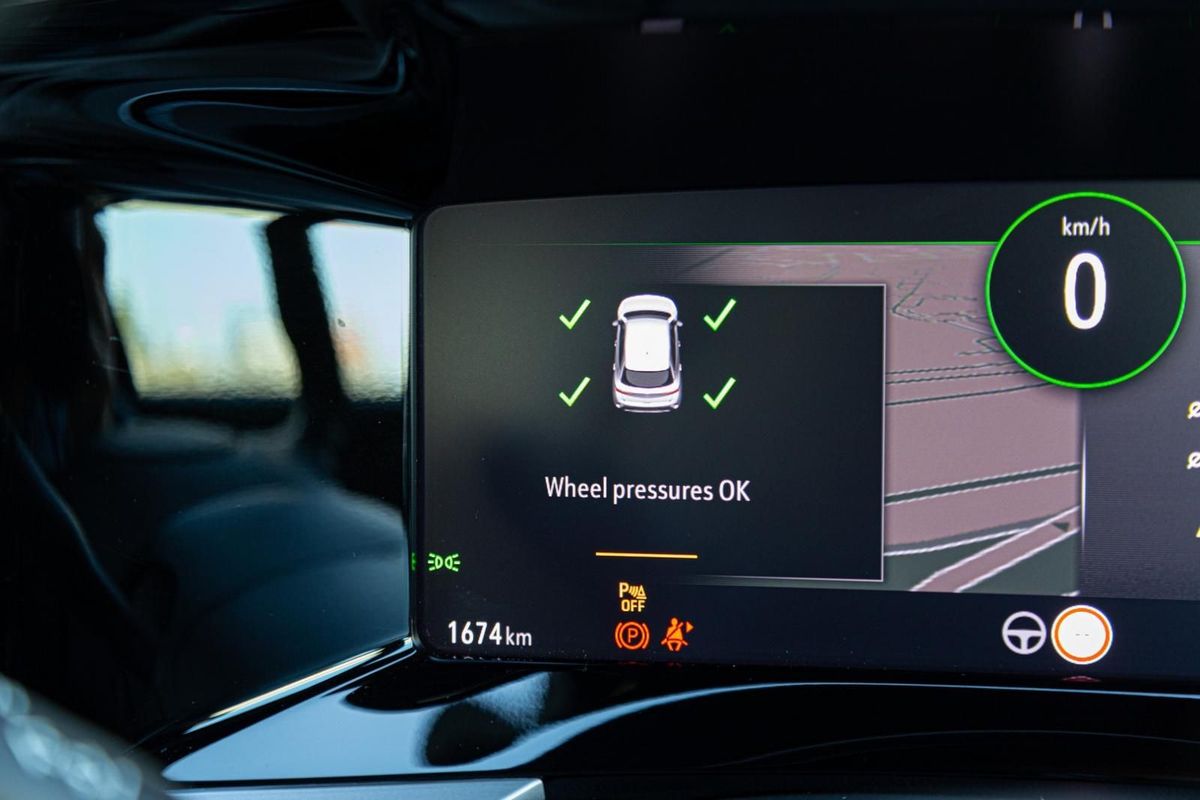
The new Mokka is also a very safe car – it offers a comprehensive suite of active safety features to help keep you on the straight and narrow, including (but not limited to) speed-sign recognition, adaptive cruise control (with stop and go), active lane-keep assist and -departure warning, forward-collision avoidance and driver-attention alert.
Price and After-Sales Support
The Opel Mokka 1.2T GS Line is priced at R519 900 and comes backed with a 3-year/120 000 km warranty and a 4-year/60 000 km service plan. Service intervals are scheduled for every 12 months/15 000km.
Verdict
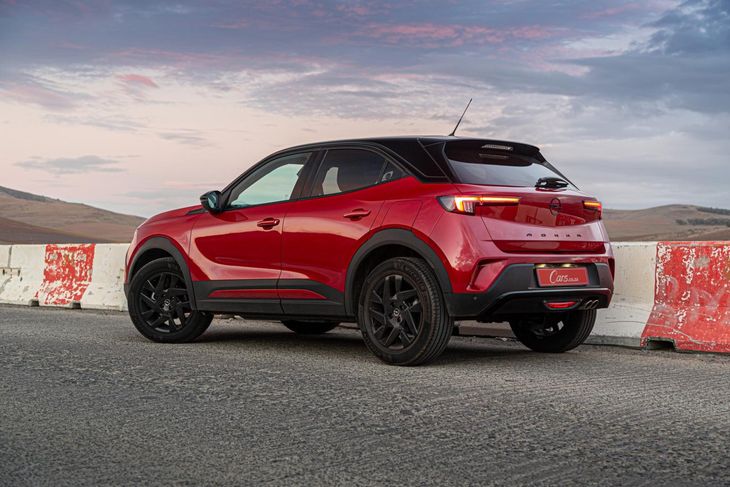
The Mokka is the most appealing Opel model to reach South African shores for some time.
When this review was written (June 2022), the Mokka 1.2T GS Line was a direct rival to the Hyundai Kona 1.6T Executive (R512 500), Mazda CX-30 2.0 Carbon Edition (R516 600), the Volkswagen T-Roc 1.4TSI 110kW (R524 000) and, at a push, the Honda HR-V 1.5 Executive (R554 500). You can make up your own mind about whether it’s the pick of the crop in terms of design, but those rivals can’t beat the Opel in terms of “the driving experience” (the Mazda comes closest).
Indeed, the new Mokka is certainly as fun to drive as it is to look at. It may trail some of its key rivals in terms of outright practicality, but its standard specification more than makes up for it. In fact, it beats many of its competitors in terms of active safety features, some luxury appointments and the standard fitment of a comprehensive Matrix (LED) Lamps Pack, for example.
So, could the Mokka be the stylish, premium, fun-to-drive compact crossover for you? That will depend on how much space you need, but if you’re interested in the 1.2T GS Line, its compromised packaging is unlikely to be a deal-breaker – boutique crossovers aren’t designed with general family-car buyers in mind. As long as lots of rear-occupant space and a huge load bay are not prerequisites, we can certainly highly recommend this fun, characterful newcomer.
Hannes Oosthuizen

With the ultimate goal of spending his life writing about cars, Hannes studied journalism at the University of Stellenbosch. A brief stint as a sports editor for Paarl Post followed, before he joined CAR magazine in 2001. He eventually became the (youngest-ever) editor of CAR in 2011, a position he occupied for two years. During his career at CAR he became a member of the WCOTY (World Car of the Year) panel, wrote a book (Cranked Up: Confessions of a Petrolhead) and was named by the Mail & Guardian as one of the Top 200 South Africans to take to lunch in its 2008 Youth Day supplement, and by The Media magazine as one of the most influential media professionals under 40 (2012). He left CAR in 2013 to experience the \other\" side of the industry