Subaru has given its current (5th-generation) Forester a mild mid-life update. Does the revision keep the brand’s top-selling model relevant in a fiercely competitive segment? How well does this flagship derivative compare with other petrol-powered all-wheel-drive competitors in the Family Car market? Read on to find out…
We like: Build quality, gravel/off-road ability, practical interior, safety
We don’t like: Average performance/fuel efficiency balance, lack of some mod-cons – including a wireless charging pad
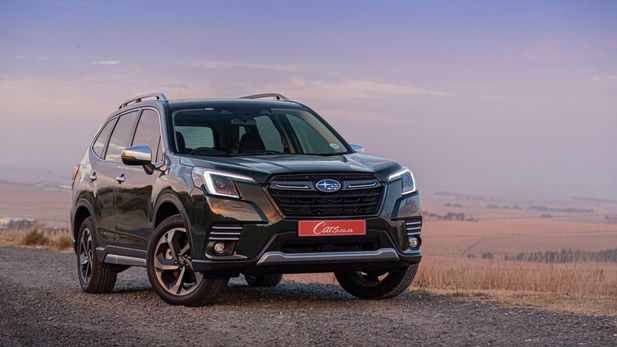
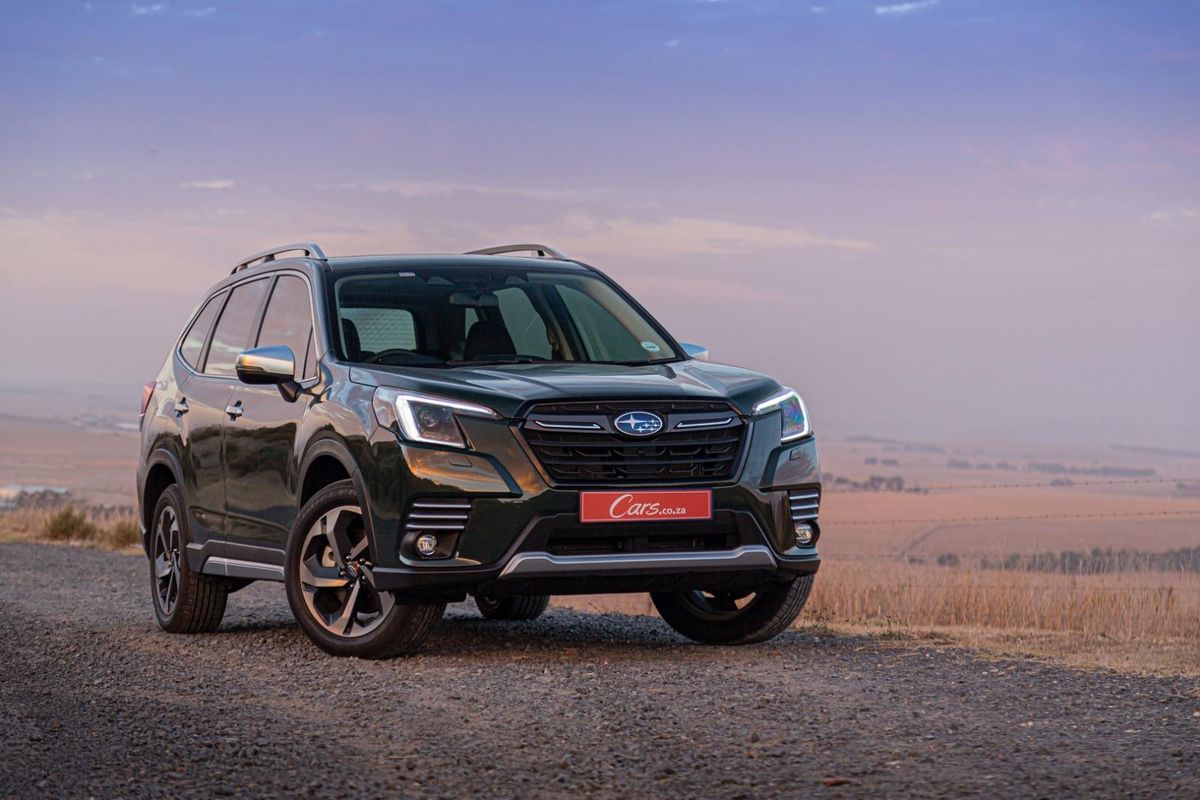
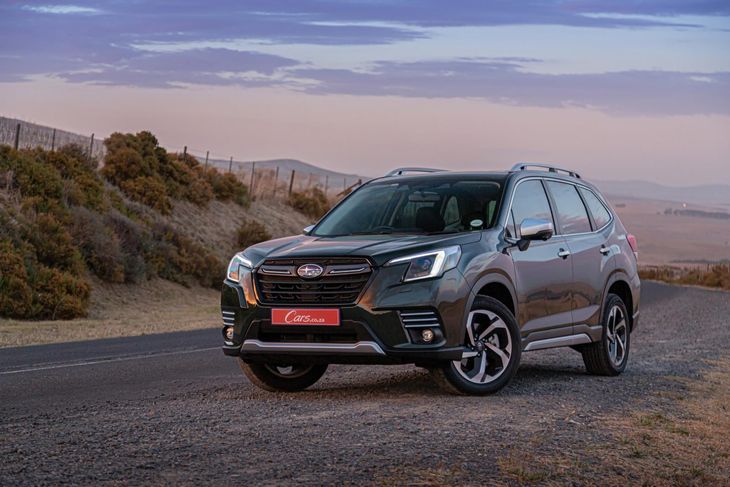
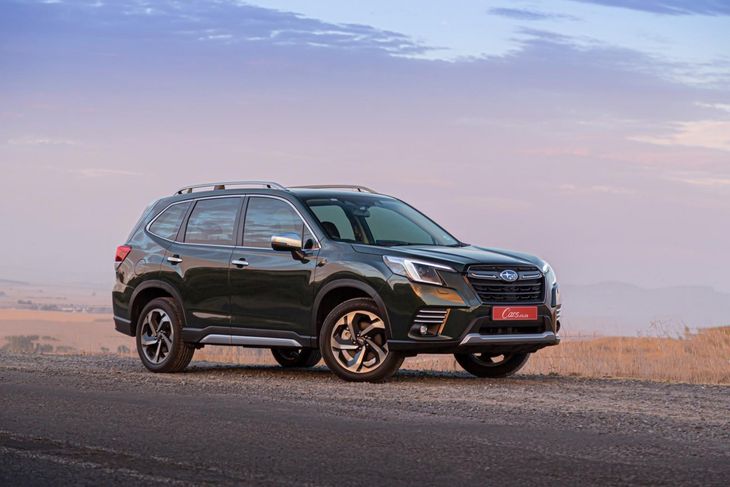
From the front, the facelifted Forester can be distinguished by new-look LED headlamps and a bigger grille with piano black detailing.
What’s different about the 2022 Subaru Forester?
The Forester is Subaru South Africa’s best-selling product, but it needs to be at the top of its game if it wants to compete in a cut-throat segment that includes such heavyweights as the Toyota RAV4, Volkswagen Tiguan, Mazda CX-5, Kia Sportage and Hyundai Tucson, the latter two of which are about to be replaced by all-new models in the near future. This is also a segment of the market in which the goalposts move shifted quite quickly; Haval now offers the H6 – a tempting all-wheel-drive alternative to those mainstream models that is priced almost unbelievably keenly, while Volkswagen’s offering has moved further upmarket following its recent facelift. The Forester competes in the “middle ground” against the likes of the Mazda CX-5 2.5 AWD Individual and Toyota RAV4 2.5 VX AWD.
Subaru’s Forester is a relatively old-school offering insofar as it retains a degree of off-road ability (an increasingly unique trait in this segment) and has a naturally-aspirated, large-capacity petrol engine. Nonetheless, the Shibuya-based manufacturer will be acutely aware of the fact that “ruggedness” is a nice-to-have characteristic in this segment, particularly for buyers with active lifestyles, but the reality is that design and modern features are potential deal-clinchers. Consequently, it is in the areas of design and standard specification (particularly active safety features) that Subaru has upped its game.
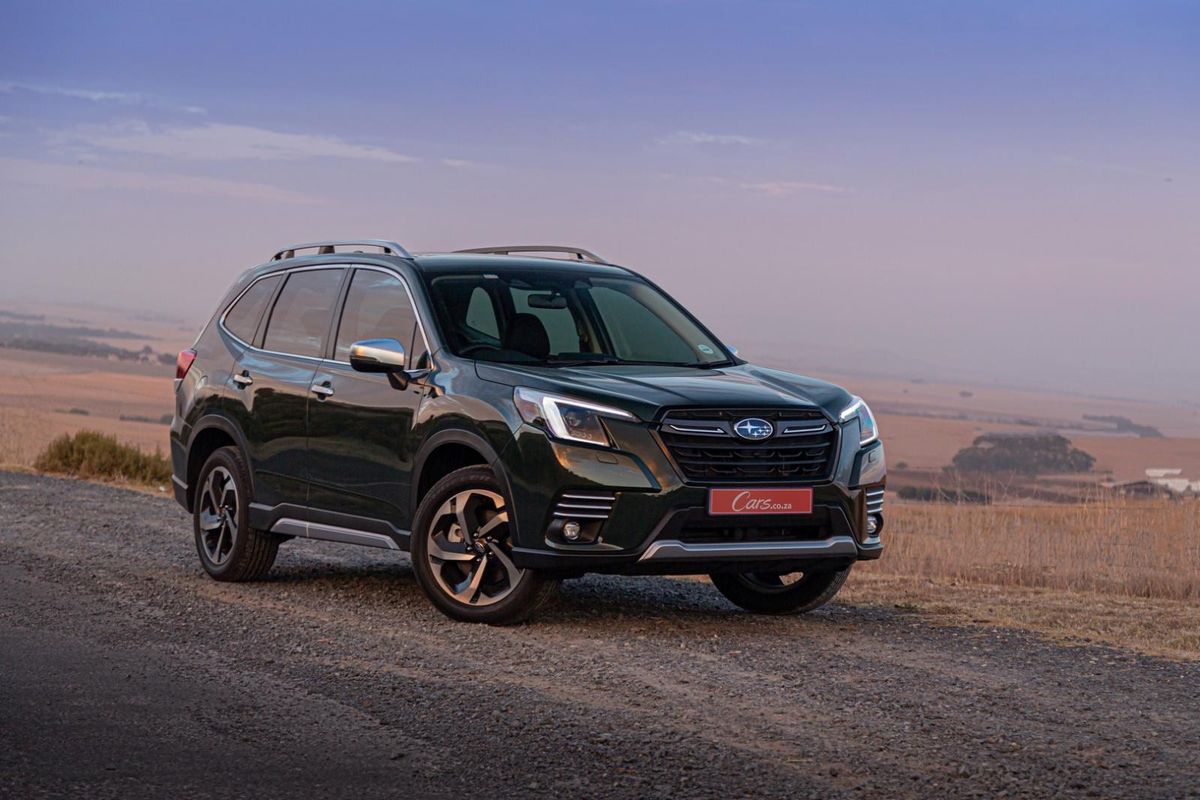
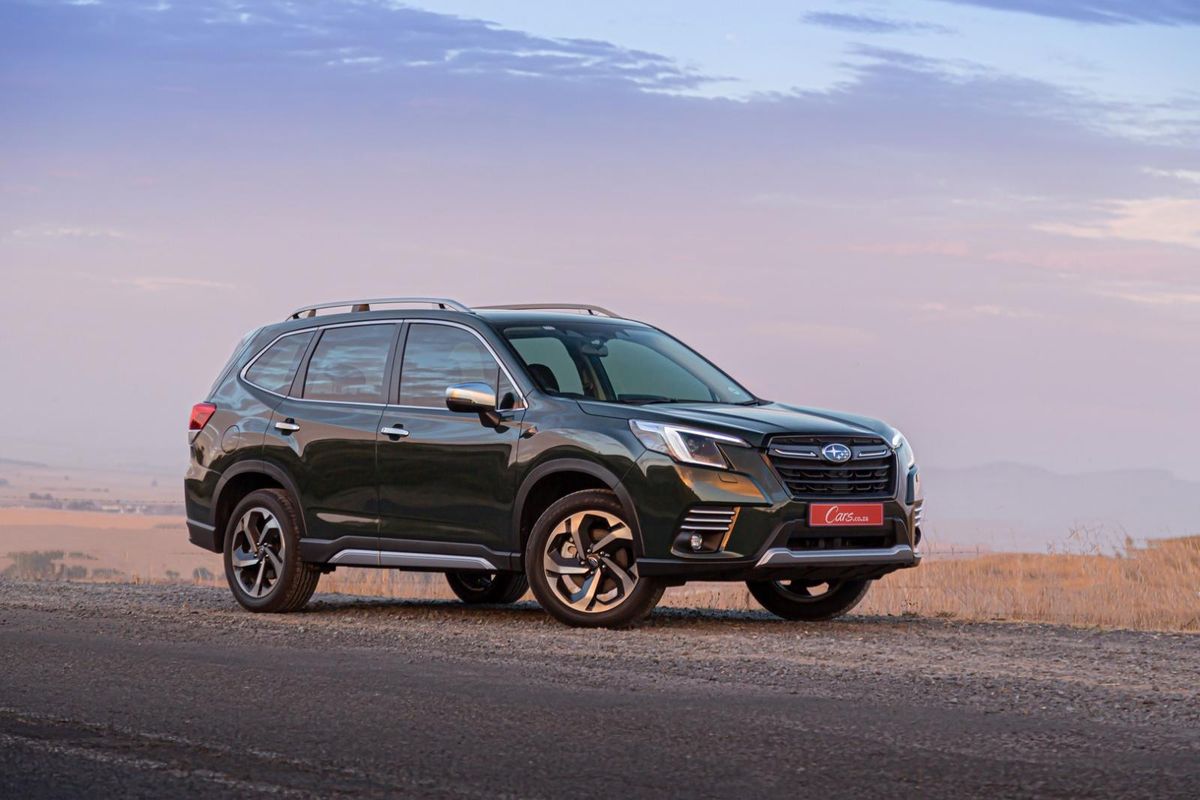
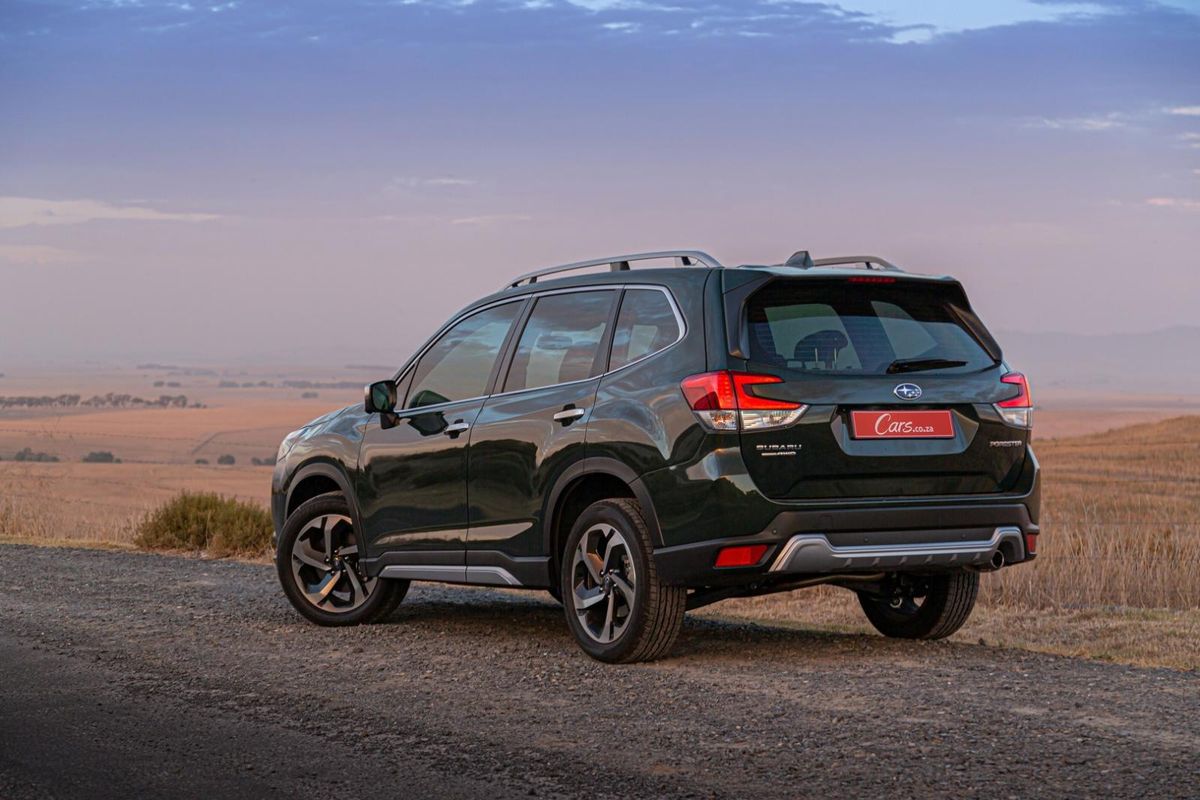
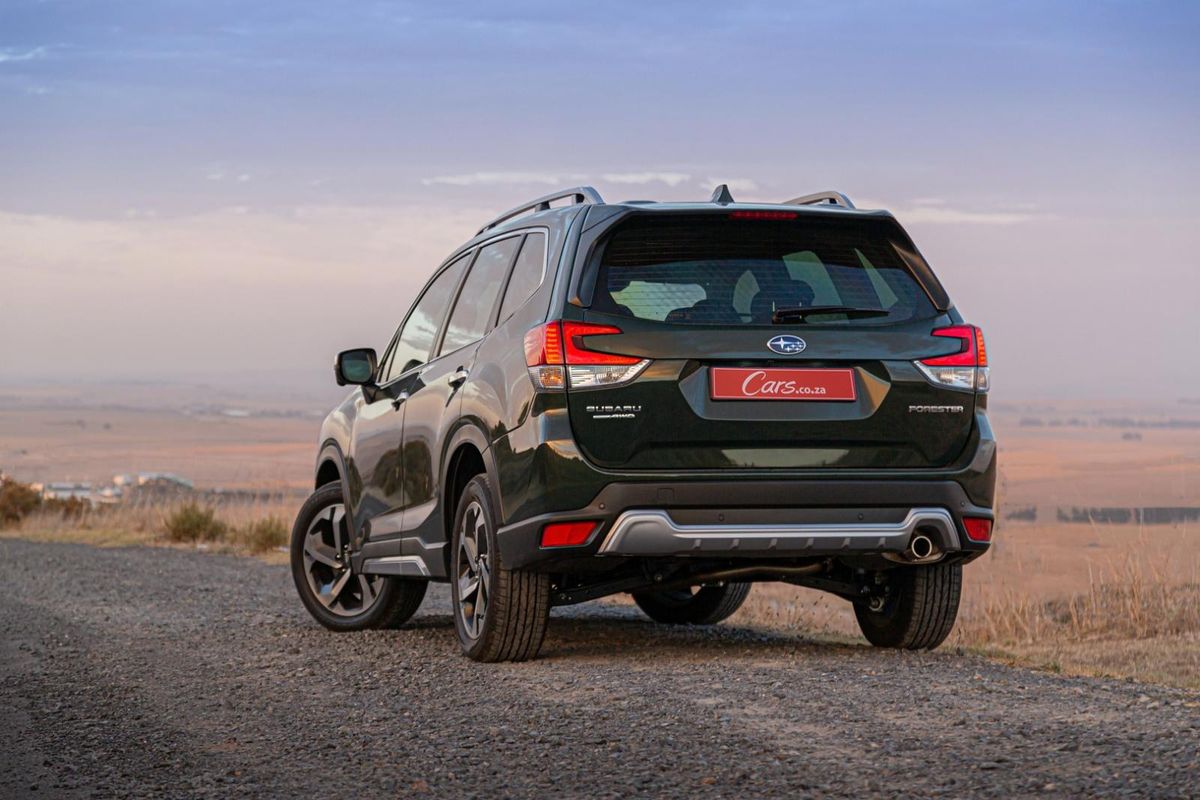
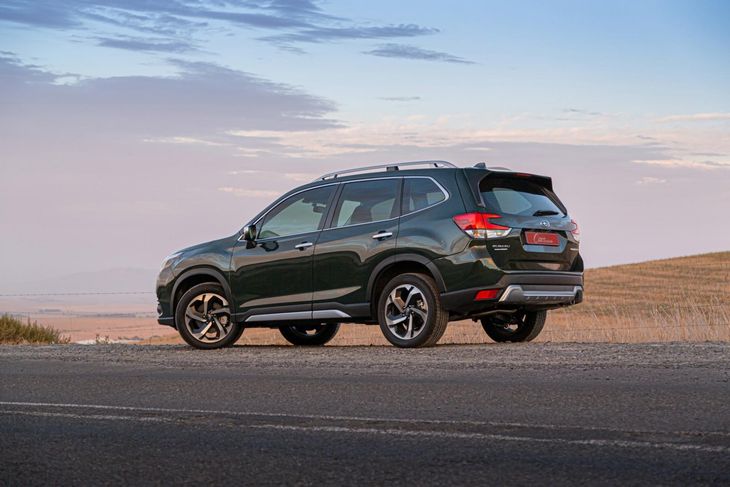
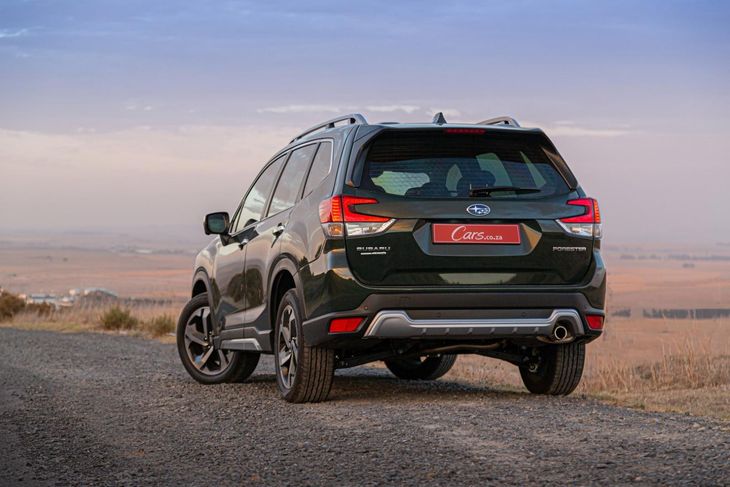
The Forester 2.5iS-ES rides on fetching two-tone 18-inch alloy wheels and debuts a new colour – Cascade Green Silica.
How the 2022 Subaru Forester fares in terms of…
Design and Packaging
As mid-product-cycle updates go, the changes to the Forester’s exterior are relatively minor, although noticeable, particularly at the front where there are more aggressively “cut” LED headlamps and a bigger grille with piano black detailing. Apart from that, besides little bits of chrome or piano black here and there, the Forester’s retains a handsome, but certainly not “flashy” appearance. This flagship 2.5i-S ES derivative rides on fetching two-tone 18-inch wheels and also debuts a new colour – Cascade Green Silica – which was not universally liked by our test team members (or casual commentators).
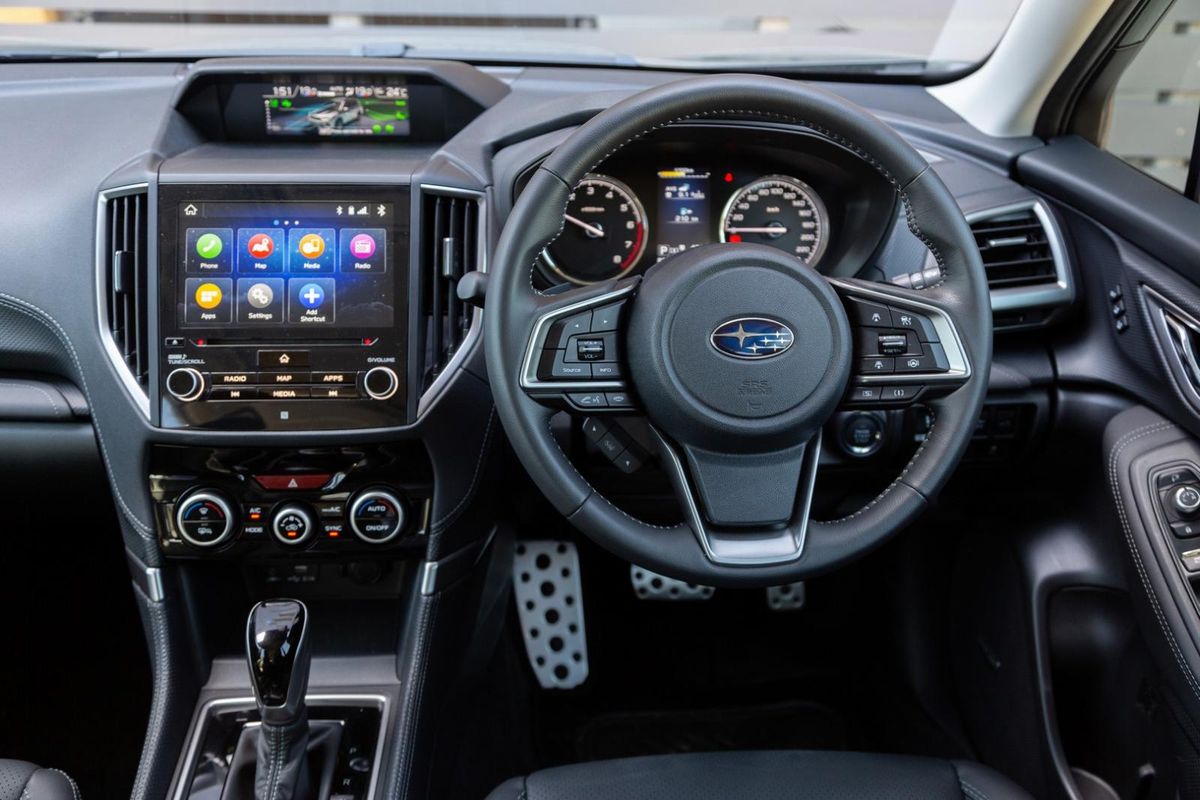
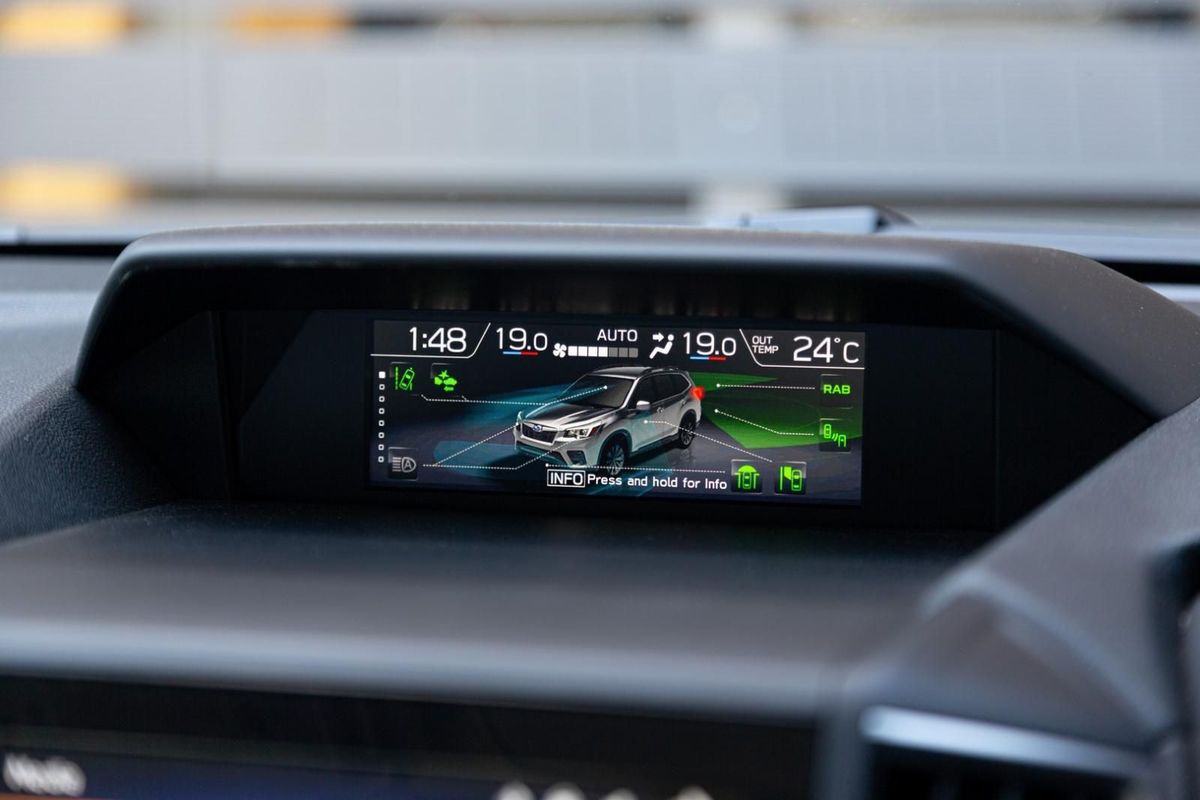
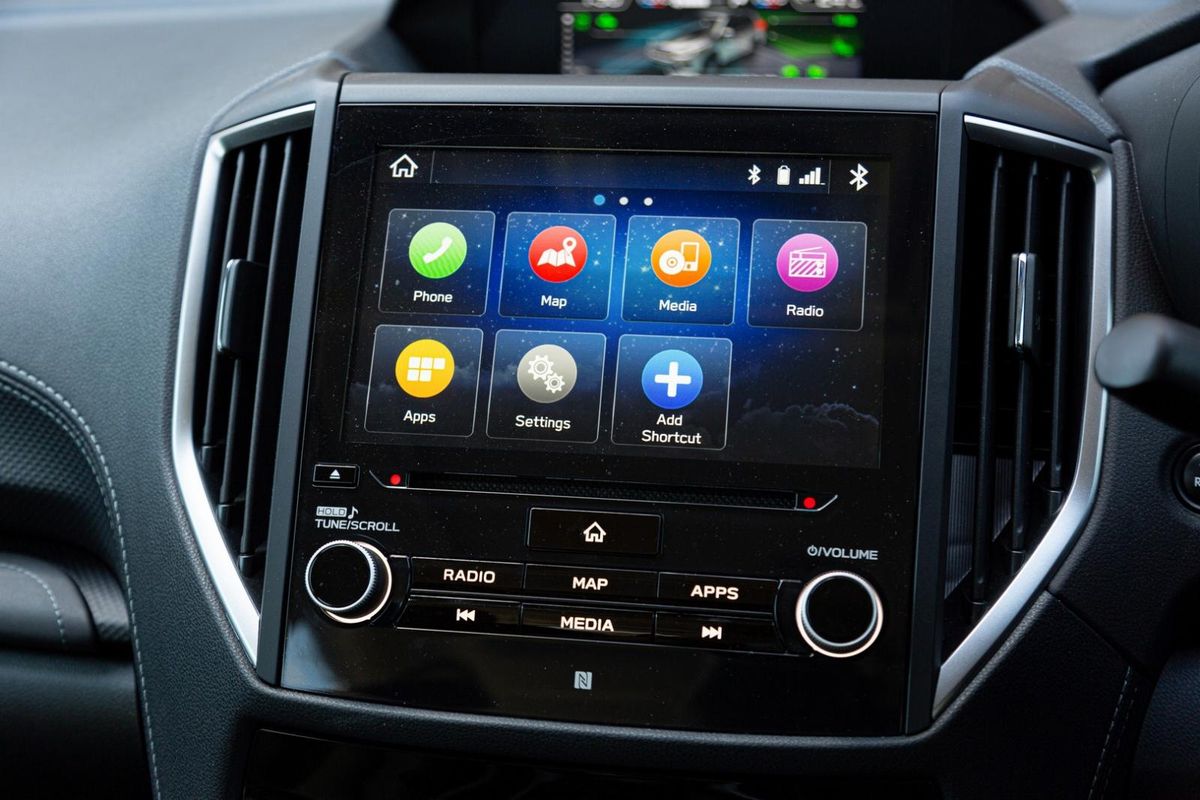
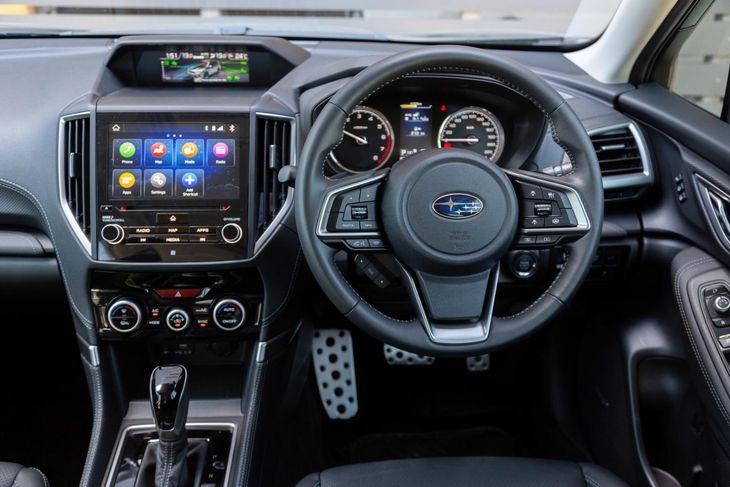
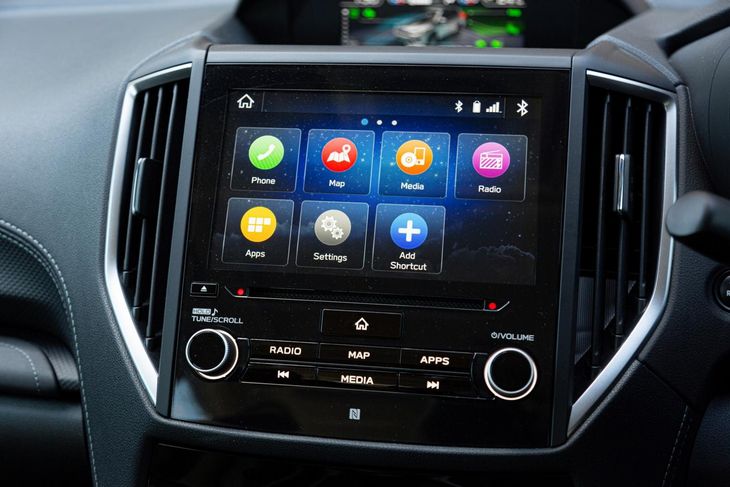
The Forester’s cabin has an upmarket ambience, courtesy of suitably premium materials and solid build quality. In some ways, the cabin is bang-up-to-date, with a crisp, high-resolution touchscreen with Apple CarPlay/Android Auto compatibility, plus another smaller screen mounted atop the fascia that can display pertinent information (such as off-road settings, range etc) or kerb-side camera views.
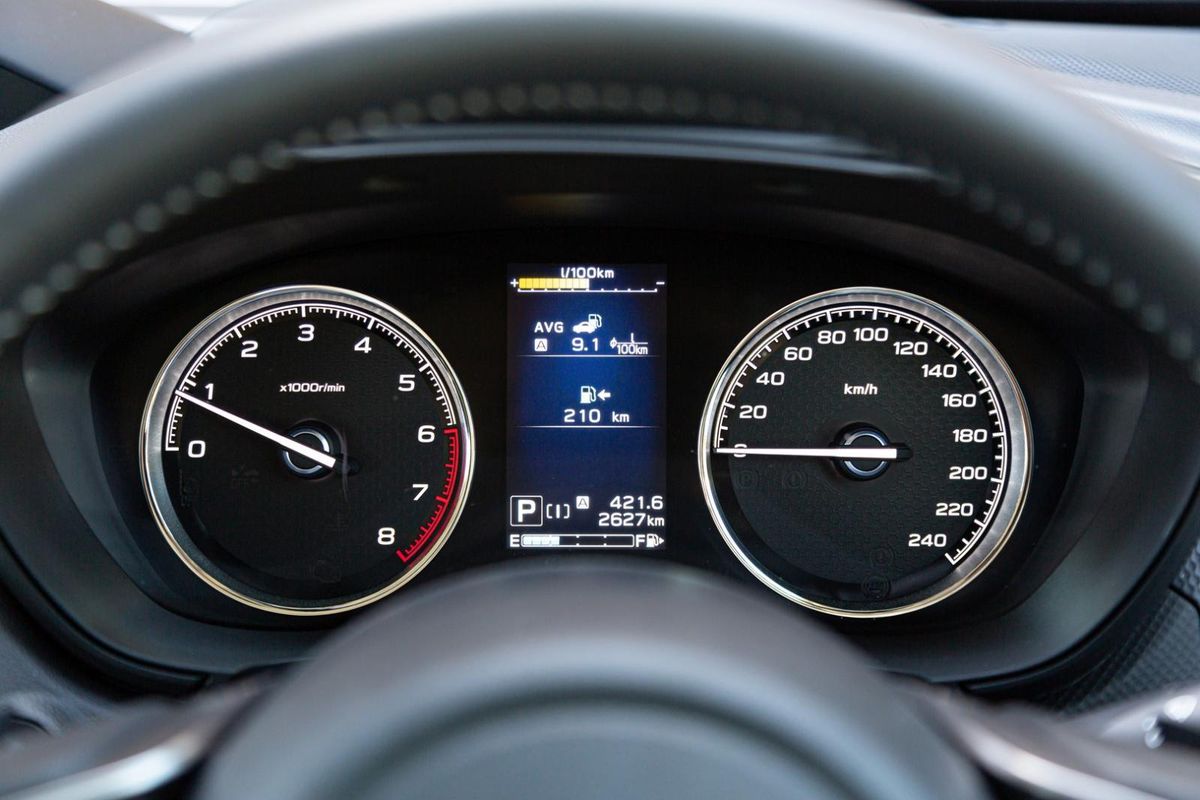
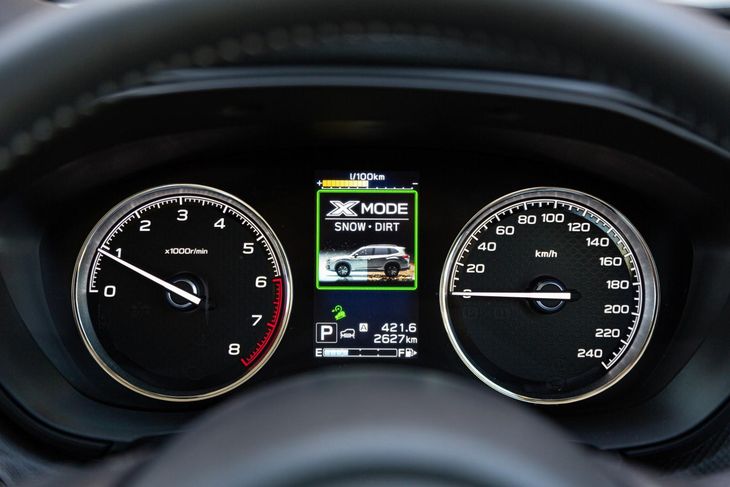
The specification isn’t fully comprehensive, however. The 2.5i-S ES does have a reverse-view camera, but full 360-degree HD systems are becoming increasingly common in this segment. The instrument cluster is not all-digital, it features 2 analogue dials on either side of a small digital screen that displays trip information. Another feature that is missing (considering what some of the Subaru’s newer rivals offer) is a wireless charging pad. Besides, the storage space provided in front of the transmission lever is a bit too narrow to fit most modern ‘phones. The extending sun visors are a nice touch, though.
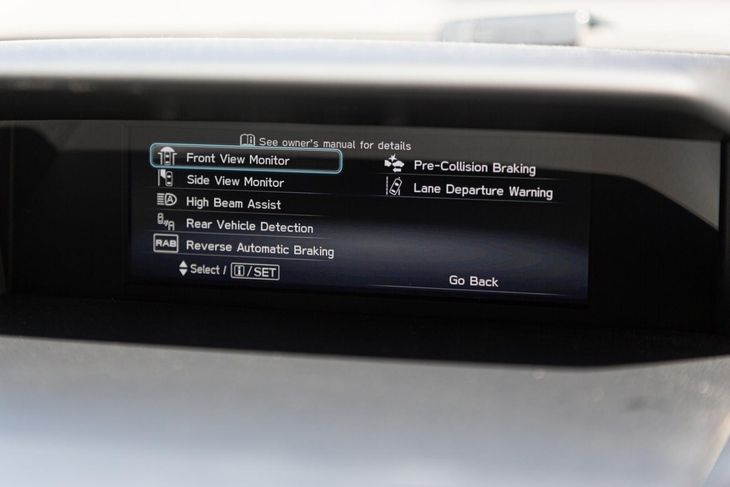
The secondary screen in the 2.5i-S ES (located above the infotainment array) displays the derivative’s standout safety features.
It’s certainly a practical vehicle in general, though. The (electrically operated) tailgate raises to reveal a spacious load bay with a flat floor (with a rugged rubber mat – as fitted in our test vehicle). Subaru claims a luggage capacity of 520 litres and, if you fold the rear seats down (as easy as pulling levers mounted on the sides of the load bay) the total stated utility space is 1 060 litres. Somewhat disappointingly, the spare wheel (located underneath the floor) is a space-saver. Subaru also points out that the roof rails are sturdier than before and can carry heavier objects (such as rooftop tents).
Performance and Efficiency
The drivetrain of the 2022 model-year Subaru Forester remains unchanged. Power comes from a 2.5-litre flat-four petrol engine that delivers 136 kW at 5 800 rpm and 239 Nm of torque at a fairly high 4 400 rpm. Note that the boxer motor’s peak power and torque figures are slightly down on what the Forester’s aforementioned 2.5-litre 4-cylinder petrol-engined AWD rivals deliver.
Although it utilises the larger-capacity engine in the range, the 2.5i-S ES is not a sporty or performance-oriented derivative.
Subaru claims a 0-100-kph time of 9.5 seconds, which is quite leisurely compared with those of its rivals, but in keeping with the overall character of the Forester. This is not a “sporty” SUV, but rather a refined, relaxed family vehicle. The laid-back demeanour of the Forester’s continuously variable transmission certainly plays a role too. This automatic does offer the option of manual shifting (via steering-wheel-mounted paddles), but we doubt many drivers will use them. The transmission is in “I” mode, which prioritises efficiency, by default, but a driver can select “S” to elicit a little more responsiveness.
In terms of fuel consumption, Subaru claims a relatively high (but arguably more realistic) average figure of 8.3 L/100 km, but during the 2.5i-S ES’ tenure in our test fleet, we recorded an indicated average of 9.5 L/100 km. While this appears to be on the high side (and it is), we suspect those similarly-engined rivals will achieve about the same returns in real-world conditions.
For what it may lack in terms of design flair, the Forester’s helm exudes solidity and feels more than reasonably equipped.
Overall, then, the Forester 2.5i-S ES’ drivetrain doesn’t set new benchmarks, either in terms of its performance – or fuel economy, but the engine and transmission are well-calibrated, sufficiently refined and eminently smooth in operation. For the record, Subaru has fitted new aluminium engine-mount brackets to improve the model’s NVH (noise, vibration, harshness) levels.
Ride and Handling
The Forester has traditionally been one of the better-riding vehicles in its segment, and the 2022 model-year iteration continues in the same vein. Subaru has made further refinements to its family car’s suspension – tweaks at the front are claimed to improve steering responsiveness, while reworked coil springs and dampers are said to further boost the ride quality and overall handling characteristics.
The Forester is indeed a supple-riding machine on a variety of road surfaces (from poorly maintained to billiard-table-smooth roads), but when the Japanese offering traverses stretches of coarser asphalt, slightly more road noise enters the cabin than one would expect. In this case, we suspect that the large panoramic sunroof might be an exacerbating factor.
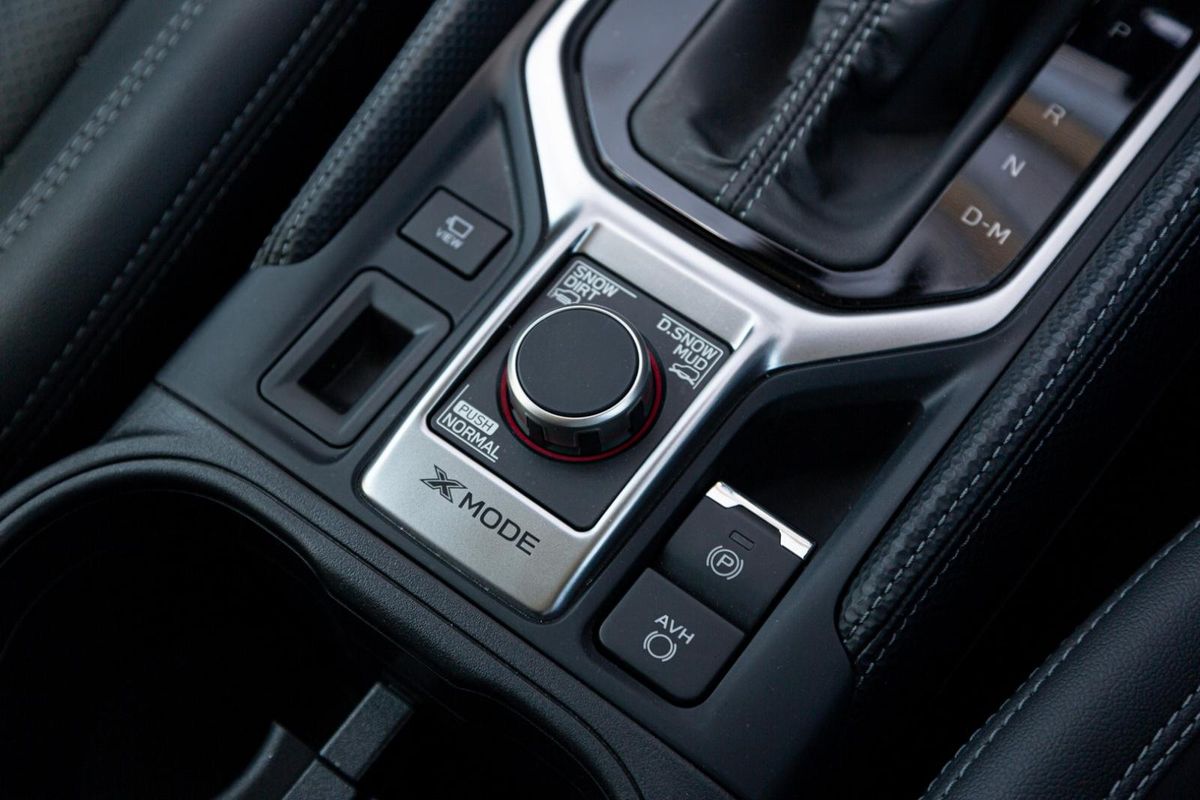
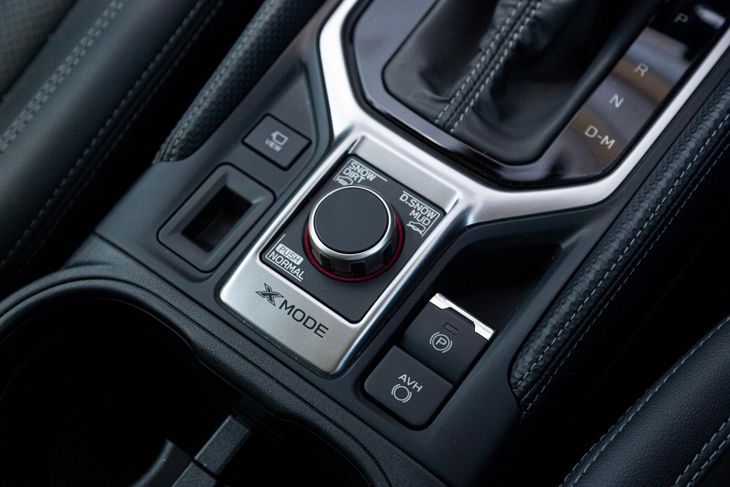
The X-Mode system allows drivers to select the appropriate off-road setting to suit the routes that the Forester’s undertakes.
Head onto gravel, however, and the Forester feels right at home. It has class-leading ride height (220 mm) and, of course, Subaru’s trademark symmetrical all-wheel drive. It feels very secure on loose surfaces – the brand’s rally genes still shine through!
The Forester also features X-Mode, Subaru’s all-terrain programme, which has been further updated with claimed improved speed management for the hill-descent control system. Essentially, X-Mode optimises the all-wheel-drive system for better traction in slippery conditions. The driver can toggle between pre-programmed settings (for snow, mud and loose dirt) via a knob on the transmission tunnel.
For what it’s worth, the Subaru Forester remains the most off-road capable offering in the Family Car segment.
Overall, we’d say that there is no vehicle in this segment that can match the Forester’s combination of on-road comfort, allied with notable off-road ability (within reason, of course). For most buyers, the latter would be a bonus, not a must-have, but then again, if you know you are going to tackle some rougher roads during your ownership period, then the Forester should certainly be high on the test-drive list.
Comfort and Features
As befitting the 2.5i-S ES’s flagship status, this Forester is generously equipped with luxury, infotainment – and especially safety – features. The front seats are electrically adjustable (driver side with memory) and there’s a big panoramic sunroof! Seating comfort is excellent, with more than enough leg- and headroom fore and aft. Dual-zone climate control is also fitted as standard.
The Forester’s infotainment system still incorporates a CD player, which is quaint, but it’s well up-to-date otherwise.
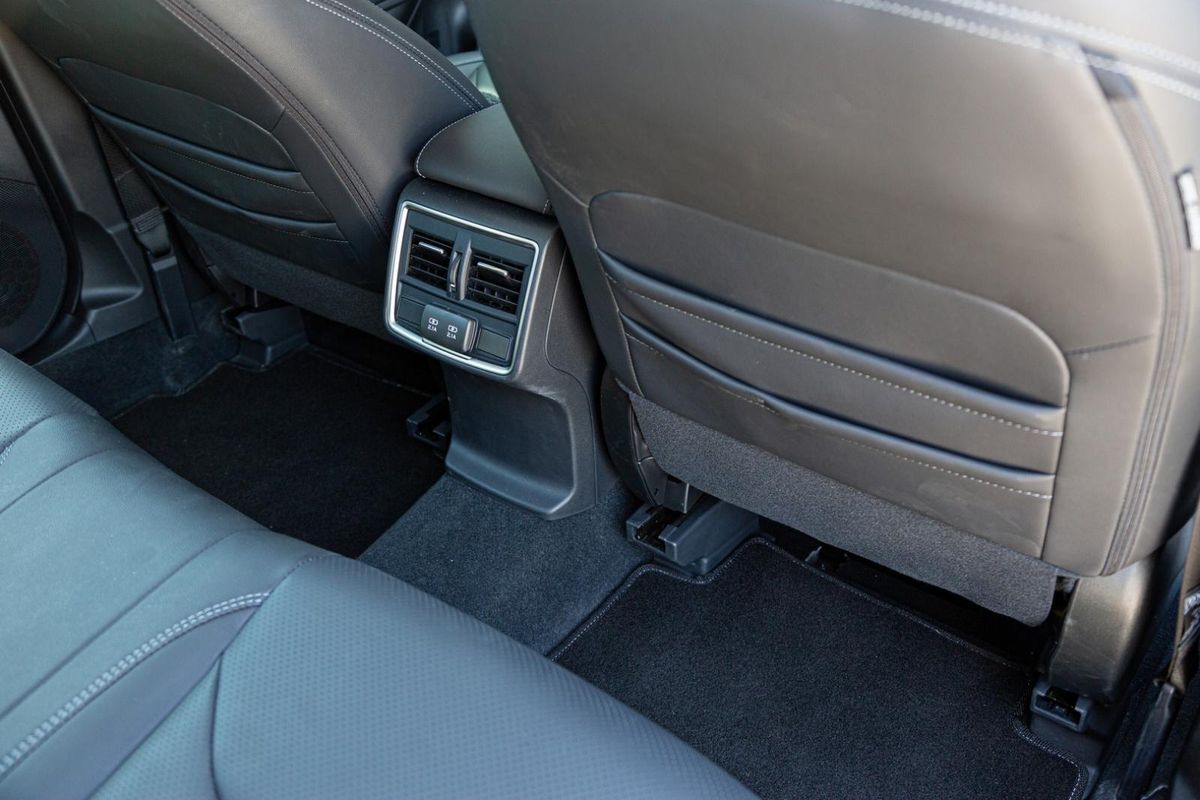
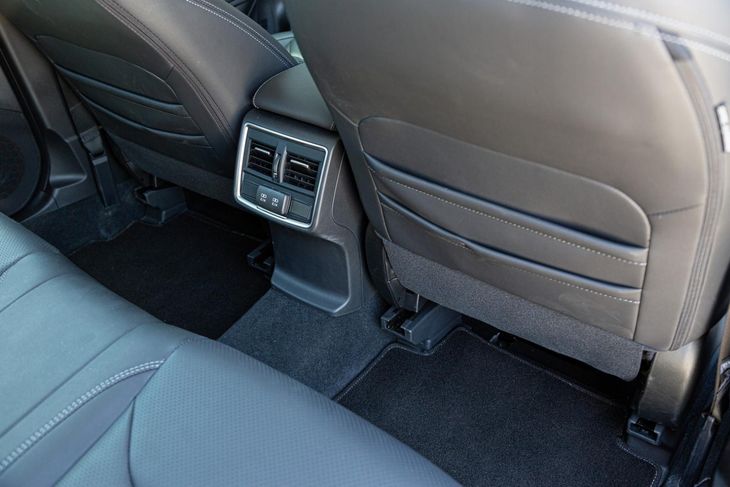
We’ve already described the infotainment system higher up in this article, but it’s worth adding that it also features Voice Control, and that there are 4 USB ports (2 each, front and rear). A throwback to a previous time (and perhaps reflective of Subaru’s more mature target audience) is the inclusion of a CD player in the infotainment package. Rear occupants also get their own ventilation outlets.
Where the updated Forester is really at the cutting edge, however, is in terms of safety features. In addition to 7 airbags, ABS with EBD and child-seat anchors, the 2.5i-S ES features Subaru’s updated EyeSight 4 suite of safety systems. Incorporating a new dual-camera system with a wider field of view (almost double compared with the previous model) and improved software, EyeSight is now able to respond faster and more “intuitively”, claims the Shibuya-based brand. Some of the (refined) functions include adaptive cruise control, automatic pre-collision braking, lane departure and sway warning.
The Subaru Forester has been on the market for 4 years, but its rear legroom is still competitive.
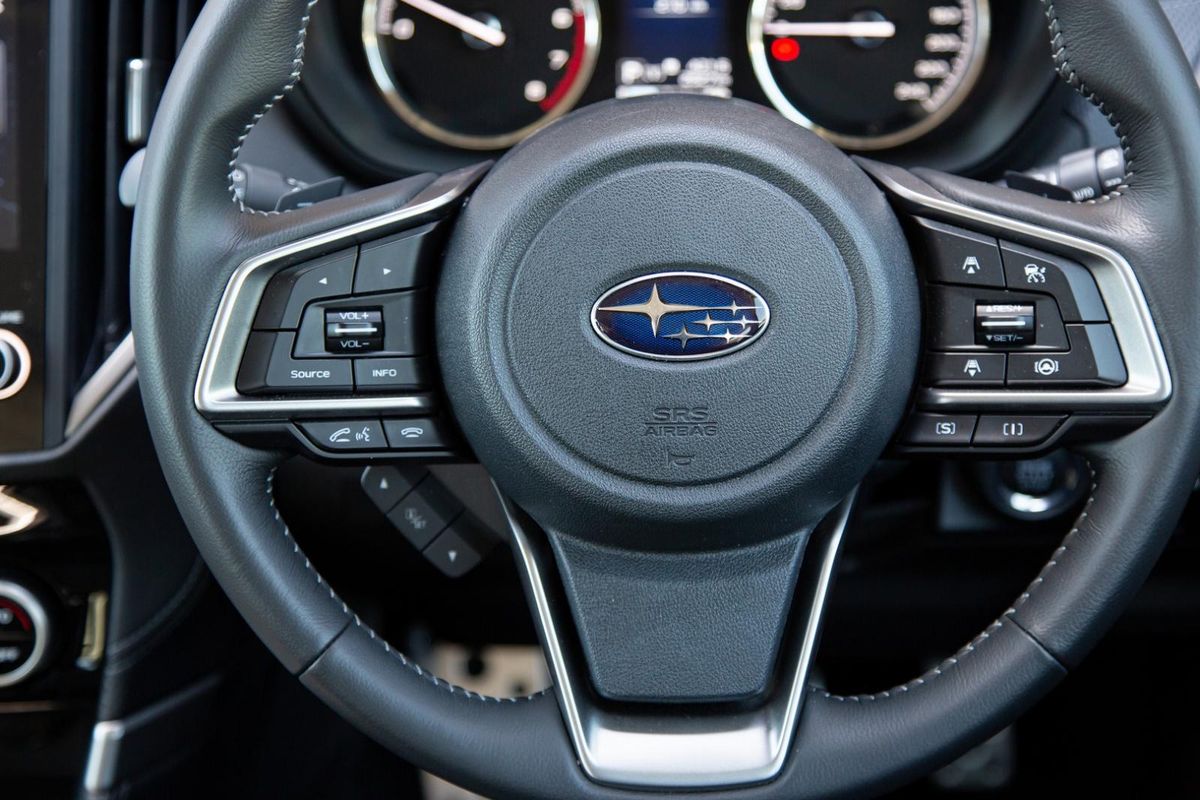
EyeSight 4 also features no fewer than 3 new technologies that use active steering inputs. The Active Lane Centering function works with the adaptive cruise control to ensure that the vehicle stays in the centre of its lane. Lane Departure Prevention actively steers the vehicle back to within the correct lane if it detects that you are “straying” off course, and then there is Autonomous Emergency Steering, which will attempt to prevent an accident by steering the vehicle in such a way to avoid a collision (with a pedestrian, car or cyclist).
But that’s not all. Rear Cross-Traffic Alert is an often-underrated safety feature – it works very well in this Forester, as does the Reverse Automatic Braking function. As ever, it takes a while to get used to all the systems and, at least initially, some of the features (particularly the lane-departure prevention) can come across as a little too over-eager to make their presence felt.
Price and After-Sales Support
The Subaru Forester 2.5i-S ES is priced at R649 000 (February 2022) and comes backed with a 5-year/150 000 km warranty and 3-year/75 000 km maintenance plan. Service intervals are scheduled for every 12 months/15 000 km.
The updated Forester offers a blend of talents that may be surplus to some buyers’ needs, but its target audience will love it.
Verdict
Priced at R649 000, the flagship Subaru Forester offers a comparable standard specification to the 2.5-litre 4-cylinder petrol-powered AWD offerings from Mazda and Toyota, but undercuts them on price… and not only by a few thousand Rand. That fact, allied with the Forester’s all-round ability, should see the 2.5i-S ES feature on more buyers’ shortlists. Simply put, this is a quality product that deserves to sell in bigger numbers than it has. And, if your lifestyle includes regular adventures off the beaten track, it jumps to the front of the queue. In summary, then, the updated Forester still won’t win you over with a flashy appearance and the drivetrain may be a little a ho-hum, but if genuine all-road usability, ruggedness, practicality and quality are non-negotiables, then you simply have to consider it strongly.
Hannes Oosthuizen
With the ultimate goal of spending his life writing about cars, Hannes studied journalism at the University of Stellenbosch. A brief stint as a sports editor for Paarl Post followed, before he joined CAR magazine in 2001. He eventually became the (youngest-ever) editor of CAR in 2011, a position he occupied for two years. During his career at CAR he became a member of the WCOTY (World Car of the Year) panel, wrote a book (Cranked Up: Confessions of a Petrolhead) and was named by the Mail & Guardian as one of the Top 200 South Africans to take to lunch in its 2008 Youth Day supplement, and by The Media magazine as one of the most influential media professionals under 40 (2012). He left CAR in 2013 to experience the \other\" side of the industry